All posts by Linda Forsberg

Linda Forsberg is an ordained Lutheran Pastor (ELCA). She has served congregations in Massachusetts, Pennsylvania, and Rhode Island. For the past nineteen years she has served as the Pastor of First Lutheran Church of East Greenwich, RI. She is blessed to have discovered the art of spiritual direction at just twenty-one years of age, and has been receiving spiritual direction for over thirty years. She was ordained at age twenty-six, and began offering spiritual direction as part of her ministry. In addition to her formal education (BA in Religious Studies from Brown University, 1981; M.Div. from Harvard University in 1985), she has continued to learn about spirituality, which is her passion. She did post graduate work at St. John’s Seminary in Newton, MA. She took courses at The Institute of Creation Centered Spirituality at Holy Names College, in Oakland, CA. In 1994 she completed a three year program, “Spirituality of Christian Leadership,” at Our Lady of Peace, in Narragansett, RI. In 2004, along with a group of people from First Lutheran Church, she created Oceans of Grace, a Spiritual Life Center in East Greenwich. In 2009 she completed a four-year certification program in Spiritual Direction from Sacred Heart University. In 2010 she received her Doctorate of Ministry in Spirituality from the Lutheran Seminary in Philadelphia. She also has worked in retreat ministries for over thirty years. She is married to Ted Gibbons, and lives in Newport, RI. She is the mother of three young adult children, and five step-children. She has four grandchildren. She is an avid outdoor enthusiast, and loves hiking and cycling. She is also a certified yoga instructor and a black belt in kempo karate. She is Christian, but loves to study all of the major faith traditions, seeking the things which unite us.

What IS This Thing Called The Trinity?

What IS This Thing Called the Trinity?

IMG_1282

For most Christians this last Sunday, June 15, was “Trinity Sunday.” Non-Christians might ask, “What IS this thing called the Trinity?” In fact, many Christians also ask this question!
The word, Trinity, is not actually in the bible. When I said this in my sermon last weekend, many church members were shocked! They think of the Trinity as a major tenet of our faith, and yet the word is never mentioned in the bible. The idea of God having three different aspects, however, IS in the bible. The first place in the bible where all three aspects of God are mentioned together is “in the beginning:” Genesis 1. In Genesis 1 God is present as the Creator; the Holy Spirit (see last week’s blog) is present as the wind (Hebrew Ruach: Wind, Breath, Spirit), which sweeps over the waters of creation.

Linda`s Pictures Grad, and 390


And Jesus is present as the Word or Logos, which God speaks and all comes to be. This is corroborated in the beautiful prologue of John 1: In the beginning was the Word/Logos, and the Word was with God and the Word was God. He was in the beginning with God. All things were created through him…”

Wentworth New Mexico 2 105
The second place theologians say the trinity is found in scripture is in Saint Paul’s sign-off at the end of 2 Corinthians: “The grace of our Lord, Jesus Christ, the love of God, and the communion of the Holy Spirit, be with you all.” 2 Corinthians 13:13. A third place the trinity is found is at the baptism of Jesus: Jesus is of course present, and then the Father/Creator aspect of God says, “Behold, my beloved Son, with whom I am well-pleased.” The Holy Spirit at the baptism of Jesus comes down from heaven in the form of a dove. (Mark 1:9-11; Matthew 3:13-17; Luke3:21-22; John 1:29-34). Finally, in last Sunday’s gospel, Matthew 28: 16-20, what is known as Jesus’ final words to his disciples before he ascends to heaven, or his, “Great Commission, “Go, therefore and make disciples of all nations, baptizing them in the name of the Father and of the Son and of the Holy Spirit, and teaching them to obey all that I have commanded you, and remember, I am with you always, to the end of the ages.”

binks pics 026

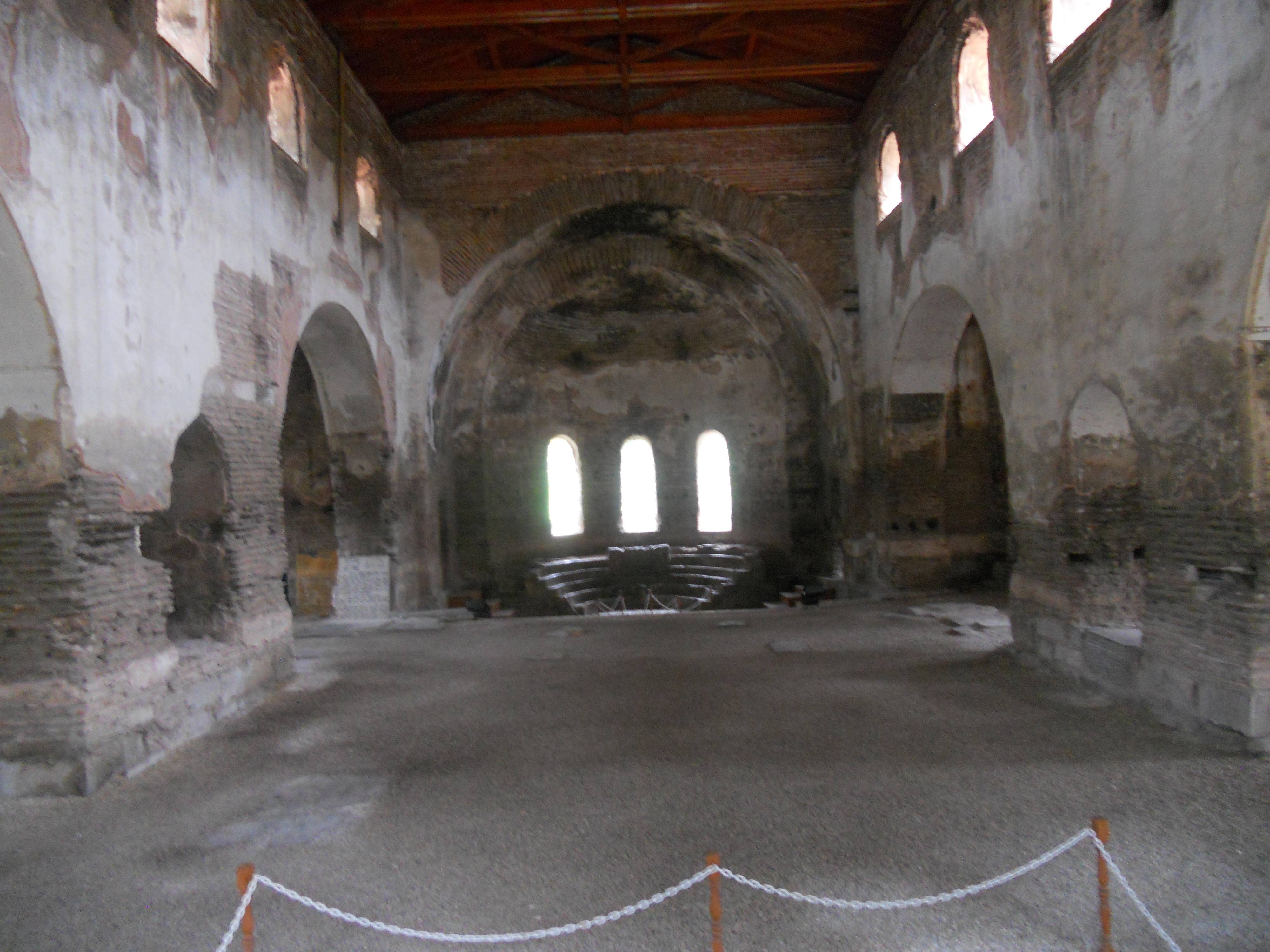
Okay, admittedly, that is not a huge amount of scriptural support. The Trinity was more fully fleshed out when early Christians defended their faith in the creeds. By 325 CE the Nicene Creed made the Trinity “official,” depicting God as Father/Creator, Jesus Christ, and the Holy Spirit, and describing the workings of all three aspects. I have actually been to the ruins of the Church in Nicea, Turkey, today called, Iznik, where the Nicene creed came to be in 325 CE!

DSCN1868

It felt pretty cool to stand there where such amazing history took place. Now every time I say the words of the Nicene Creed, it has a much deeper meaning for me.

DSCN1858

As some of you know, we also named our golden retriever Iznik, after this amazing place. 

IMG_1327

But if we are truthful with ourselves, even for Trinitarian Christians, the Trinity is still difficult to understand. For kids’ sermons on Trinity Sunday I sometimes use H2O to “explain” it. We think of H2O as water. but H2O can actually exist in three different states: liquid, solid and gaseous, and can even materialize as all three at the same time: water, ice and water vapor or steam. But it is all still H2O. Three forms, or aspects, yet one substance.

friendster 2

Saint Patrick used the Shamrock.  Marin Luther used a less precise example, which I have also used in children’s sermons: an apple. He said that an apple has three parts: the red skin, the white flesh of the fruit, and the core, but it is still just one apple. When I was about fourteen and in confirmation class, my teacher asked us how we understood the Trinity. I said, “Well, I am Linda, just one person, but different people think of me in different ways, depending on our relationship: to my parents, I am daughter; to my sisters, I am sister; to my friends, I am friend.”

IMG_3177

The older I get, the more I like that fourteen-year-old definition I came up with, because to me, what the Trinity is all about is: relationship! In fact, a few years ago, as I finished my doctorate at the Lutheran Seminary in Philadelphia, I ended up doing an independent study on the Trinity with Dr.John Hoffmeyer. This independent study yielded a 45 page research paper, so if there is anything else you want to discuss about the Trinity, just ask!
For me it all came down to the fact that the Trinity is about relationship.

IMG_2646


The Trinity reveals a God of relationship. In fact, even within God’s own being, God exists in relationship: Father to Son, Son to Spirit, Spirit to Father. Father and Son are in fact relational words: you cannot be a Father without a child. You cannot be a Son without parents.

IMG_3227

The implication, therefore, is that if God exists in relationship, then we too experience God in relationship: in our relationship with God, and in our human relationships. As my favorite line, from my favorite musical, Les Miserables, says:

“To love another, is to see the face of God.”7-31-2006-13

So…this day, each day, may you experience God-made-flesh in all your relationships!

May you see God in all you encounter, and may you reflect God to all you encounter,

Pastor Linda Forsberg, Copyright June 18, 2014

Spiritual But Not Religious? What is Spirit?

Spiritual But Not Religious? What is Spirit?

DSCN2112

Three years ago I went through a yoga teacher training program to become a certified yoga instructor. I had been practicing yoga for approximately fifteen years at that point. One of the things I love the most about yoga is that it always begins with breath work. In yoga there are various kinds of breathing techniques. All of the stress and distractions you might feel when you enter the yoga studio quickly disappear when you focus solely on your breathing, in, then out.
Was I surprised to discover that in Sanskrit, the mother language of Hinduism and thus also of yoga, the word for breath is “Prana.” In fact, the school of yoga in which I became certified is called Prana Flow. (See Link in side bar.) Prana means “breath, wind, and…drum roll…Spirit.”
“Prana” can be understood with a lower case “p” in the sense of the human spirit/breath/wind; or, with a capital “P” it can be understood as The Spirit of Life, the Great Wind, the Breath of Heaven!
I discovered, in fact, that in every language I know, in every faith tradition I know, the same word for “Spirit” also means wind or breath! Every faith tradition I have studied, in fact, includes some form of prayer or meditation, where we focus simply on every breath we take, knowing that we breathe in the Spirit, to empower us for the living of our lives, then we breathe out the Spirit, praying that the Spirit will transform our world.

Jules National Parks 109
In my own Judeo-Christian tradition, in the Hebrew Bible, the word for Spirit is Ruach. In Genesis 1, the Hebrew Bible begins with Ruach, often translated as “Wind,” sweeping over the waters, and all creation coming to Life! It is Ruach which breathes into the prophets and inspires (which literally means “to fill with spirit or breath”) them to preach of God’s justice for all the earth.

New Mexico 1 and 2; Jules' prom; grads 041


In one of my favorite texts, Ezekiel 37, Ruach blows through the desert during Israel’s time of exile in Babylon, and brings new life into a valley filled with dry bones. In Hebrew Ruach is feminine; the Spirit is a She!

DSCN2959
In the Greek of the New Testament, the word for the Holy Spirit is “pneuma,” from which we get “pneumonia,” which has to do with the lungs, and our breath. Pneuma is a neuter word in Greek, but a feminine concept. This past Sunday, in Christian churches throughout the world, we celebrated Pentecost, which for Christians is the day when the Holy Spirit came upon those from every nation gathered in Jerusalem, and blew like a violent wind, filling the apostles with tongues of fire, through which they spoke a language which everyone understood as though it were their own language! (See Link to my sermon from Pentecost Sunday, which is all about the Holy Spirit, in Sidebar) In Christianity the Festival of Pentecost is one of our three greatest Holy Days, besides Christmas and Easter. Our Bishop, Rev. James Hazelwood, said it is the only Festival which has not been co-opted by Hallmark cards! This is because the Spirit is something wild and free, and beyond our control!

Ted Top All Time  303 Pictures-1
In other words, the Spirit can be as powerful as a mighty wind which we witness in hurricanes, tempests, and whirlwinds, or it can be as gentle as a cool, calming breeze. Jesus said, “You will receive power when the Holy Spirit comes upon you, and you shall be my witnesses in Jerusalem, in Samaria and Judea, and to the ends of the earth!” (Acts, Chapter 1) In other words, if you feel too small, too weak to tackle something in your life which feels overwhelming, remember that the same power which we see on the news moving trees and houses and stirring the oceans, lives in you and me to empower us for the living of our lives!

Yellow Stone First Day 132
The Spirit is also not beyond us, but within us, as close to us in fact as our very next breath. We have a women’s spiritual support group at our church. One time we had a whole session on the Spirit, where we focused on the common expression people often say to each other during the most stressful situations, “Stop! Take a deep breath!” We realized that that expression is in fact one of the best things we can say to someone, because it literally means, “Stop! Breathe in the power that blows through the cosmos, the limitless power of creation, which lives and breathes also in you, and is available to you this very moment.”

Nova Scotia 033
Breathe. Breathe in the Breath of Life. Breathe out that Spirit which can transform the world.
Pastor Linda Forsberg, Copyright June 10, 2014 (my birthday:))


(For English Version, Scroll Down) Dios en el Centro: Una Aventura de Lucha contra el Rachismo, Parte 2

1907636_10152051194721433_78505161086977438_n


Dios en el Centro: Una Aventura de Lucha contra el Racismo, Parte 2

“Hay un centro en la sociedad EE.UU. que se considera normal: el hombre, blanco, heterosexual,
casado, Protestante (Cristiano), que domine el inglés, de clase media alta, que sea
Anglo-Americano, sano, educado, de mediana edad y que ademas incorpore una belleza estándar.
Este es el estándar por el cual todos son medidos. Alrededor de este centro estamos el resto de
nosotros – a diferentes distancias. Algunos de nosotros estamos más cerca, y otros más lejos…
Las tierras fronterizas rodean este “centro de la normalidad”… La región fronteriza es una zona
llena de sabor. Está llena de posibilidades, el caos, la creatividad, el conflicto, y hasta la belleza.
Es el lugar donde la armonía y el conflicto existen al mismo tiempo. Es un lugar que trasciende y
desafía el dualismo, donde no puede existir la realidad lineal rígida; un lugar donde la
multiculturalidad y la diversidad de identidades se constantemente mezclan y se mezclan en un ir
y venir de lío, mediación y mitigación.”

Así escriben Robette Anne Dias y Chuck Ruehle, Co-Directores ejecutivos del Ministerio
Crossroads en Chicago, (ver enlace en la barra lateral), en su artículo titulado “Las Tierras
Fronterizas.” Aquellos de nosotros que participamos en una reciente aventura de lucha contra el
Racismo en la Ciudad de Nueva York leímos y discutimos este artículo como parte de nuestro
trabajo contra el racismo juntos. También leímos el primer artículo publicado por nuestra nueva
presidenta de obispos, la obispa Elizabeth Eaton, “Aprender a hablar una dura verdad: La Aguja
apenas se movió en la ELCA a convertirse en una iglesia diversa.” En verdad, esto se debe a la
iglesia, al igual que la mayor parte de nuestra instituciones estadounidense, vive en este
“Centro.” Hasta que aquellos de nosotros que vivimos en el “Centro” reconocemos nuestro
propio lugar de poder y privilegio, a saber nuestro propio “racismo”, la verdadera diversidad no
va a suceder.

IMG_0221

La lectura de estos artículos y de ser parte de esta aventura me trajo a reconocer mi propio
racismo, y yo había pensado que no era una persona racista. Yo, sin embargo, vivo muy cerca del
“Centro.” Yo no soy hombre, pero aparte de eso, puedo marcar casi todo lo demás en la lista. En
otras palabras, yo vivo desde un lugar de poder y privilegio que muchos no experimentan. Tuve
una sencilla realización de mi privilegios blancos durante nuestra preparación para este viaje.
Nuestros compañeros de ministerio de Gloria Dei Ministerio Multicultural en Providence, RI, se
reunió con nosotros en la Primera Iglesia Luterana en East Greenwich antes de nuestro viaje,
para discutir los artículos anteriores. El pastor de Gloria Dei, el Rev. Santiago Rodríguez, nos
pidió a todos presentarnos. La mayoría de la gente de Gloria Dei hablan español como su idioma
principal. A medida que se presentaron en español, dijo el pastor Santiago, “En inglés –
preséntese en inglés.” Uno por uno, ellos lucharon, en distintos grados, para presentarse en
inglés. Entonces nos sobrevino, nosotros somos blancos y gente suburbanas de la Primera Iglesia
Luterana de East Greenwich, Rhode Island, cuya lengua materna es el inglés. Nosotros
cómodamente nos presentamos también en Inglés. Como fuimos alrededor de la mesa, un
pensamiento de miedo se me ocurrió: “Debo tratar de presentarme en español! Después de todo,
he estado estudiando Rosetta Stone Español desde que mi marido me lo regaló para Navidad!
¿Por qué debería sentarme allí en mi privilegios blancos y bajarme fácil, en la introducción de mí
misma, en mi idioma natal cuando mis hermanas y hermanos lucharon para presentarse en un
idioma que NO es su lengua materna?” Estaba tan ansioso por hacer esto, porque me siento
incómoda y avergonzada de hablar en mi español tan incipiente, pero no es ese el punto de
nuestro trabajo contra el racismo juntos? Así que, con la voz entrecortada, me presenté en
español. Mis hermanas y hermanos de Gloria Dei con tanta gracia estallaron en aplausos, y me
sentí en alguna pequeña manera liberada de los grilletes de mi propio privilegios blancos.

IMG_1488

Me recuerdo una vez, hace unos años, cuando estaba en el Registro de Vehículos y un joven
hispano de pie delante de mí en esa línea que es notoriamente larga y lenta. Finalmente, cuando
el joven llegó a la parte delantera de la línea, la trabajadora del Registro de Vehículos habló con
una dureza a él, porque él no había llenado los papeles correctos. Cuando el joven trató de
hacerle algunas preguntas, estaba claro que el inglés no era su idioma principal. El tratamiento de
la trabajadora e él joven fue impactante para mí. Después groseramente ella lo despidio, ella
dulcemente me llamó hacia adelante para atender a mi asunto. Le dije a la trabajadora que iba a
ayudar al joven a completar su papeleo. Desde ese momento, la trabajadora me trató
groseramente también. Yo no sabía nada de español en ese momento, pero sabía italiano, que es
un poco parecido, así que él y yo juntos lo llenamos y sonriendo uno al otro con triunfa él
presentó su documentación a la grosera trabajadora del Registro de Vehículos.

¿Y ustedes, que también viven en el “Centro”? Cuya piel blanca y educación y el nivel
económico te dan un lugar de poder y privilegio que ni siquiera tienes que pensar? ¿Alguna vez
has tenido una experiencia reveladora, revelando tu propio racismo? ¿O te gusta estar demasiado
cómodo para aventurarte en el incómodo, difícil, complicado, pero gloriosa, vida que da “Las
Tierras Fronterizas”?
IMG_3062

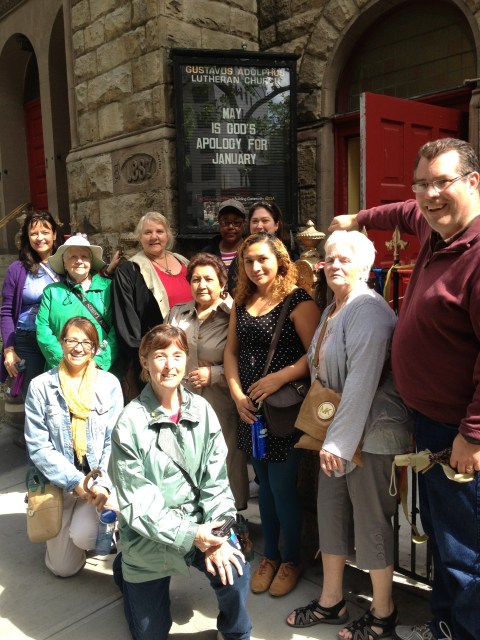
Mientras anduvimos en la ciudad de Nueva York, nuestro grupo multicolor aventuró
intencionalmente a lugares “Fronterizos” de culto, para tratar de aprender de otras comunidades
de fe lo que han creado en sus comunidades diversas, para que pudiéramos seguir su ejemplo en
nuestros propios lugares de culto. Uno de esos lugares que algunos de nosotros nos aventuramos
a visitar fue una iglesia cerca de Union Square llamado Iglesia Luterana Gustavo Adolfo, 155 E.
22nd Street. Un miembro de nuestro grupo había visitado la Iglesia Gustavo Adolfo cuando
visitó a su hijo, un estudiante en la Cooper Union. Había sido gratamente sorprendido por la
diversidad de la congregación: “Nunca antes había visto tanta diversidad en una Iglesia
Luterana” (Recuerde, estadísticamente la ELCA – Iglesia Evangélica Luterana en América – es
96% blanco, incluso después de 25 años comprometerse a convertirse en al menos un 25% de
personas de color!)

IMG_3065

Nos dieron la bienvenida en la sala comunitaria de la Iglesia Gustavo Adolfo, por su pastor, el
Reverendo Christopher Mietlowski y Diacono practicante, el Sr. John Ogren. Pastor Chris nos
dijo que muchas iglesias cuelgan un cartel que dice: “Todos Son Bienvenidos,” pero pocas
iglesias en realidad encarnan eso. De hecho, el Pastor Santiago nos recordó a nuestro grupo, el
reverendo Dr. Martin Luther King, Jr., señaló que existen las comunidades más segregadas en los
Estados Unidos el domingo por la mañana – por desgracia, en las iglesias! Pastor Chris dijo que
cuando llegó por primera vez a Gustavo Adolfo, un domingo por la mañana, una mujer sin hogar,
llevando sus posesiones en varias bolsas, se aventuró en su sala de becas. Uno de los miembros
de la iglesia le dijo con disgusto, “Pastor, tal vez deberíamos cerrar las puertas, porque todos los
miembros de la iglesia ya están aquí, y de esa manera gente como esta no son capaces de entrar”
Mientras que eso es el sentimiento de tantos miembros de las iglesias tradicionales, eso no es lo
que Jesús, en cuyo nombre nos reunimos, nos demuestra a hacer. Pastor Chris dijo que hoy en
Gustavo Adolfo están comprometidos con la “hospitalidad sagrada,” donde todos, absolutamente
todos, se le hace sentir realmente bienvenido.

IMG_3069

John Ogren, Diacono practicante en Gustavo Adolfo, compartió su propia experiencia personal
de la exclusión con la iglesia que él creció, simplemente porque él es gay. Estaba tan herido por
esta experiencia personal de la exclusión basada en la orientación sexual que él se fue de la
iglesia por completo durante muchos años. Luego, después del 9/11 del 2001, sintió un profundo
anhelo, como lo hicieron muchos en los Estados Unidos, para volver a una comunidad de fe. El
trabajó cerca de la Iglesia Gustavo Adolfo, y caminó por allí, día tras día. Le encanta la música, y
sintió que la música flotando fuera de Gustavo Adolfo estaba llamándolo. El compromiso con la
hospitalidad sagrada de la iglesia valió la pena, porque una vez que John Ogren entró a las
puertas de la iglesia, nunca se ha ido.

El firme compromiso de la ELCA a la plena inclusión de personas de LBTGQ en su histórica
decisión de 2009 es un orgullo que tengo como una luterana. De hecho, fue una experiencia que
me cambio la vida, estando en esa gran asamblea nacional de la iglesia cuando la ELCA hizo
esta decisión tan firme. Doy gracias a Dios de que mi propia congregación es verdaderamente
bienvenida a la comunidad LBGTQ. Pero, ¿cuántas de nuestras iglesias en realidad encarnan esta
hospitalidad sagrada? A la inversa, ¿cuántas han cerrado sus puertas a los que son parte del
LBGTQ, causando heridas que aún se rezuma con el dolor?
IMG_3092

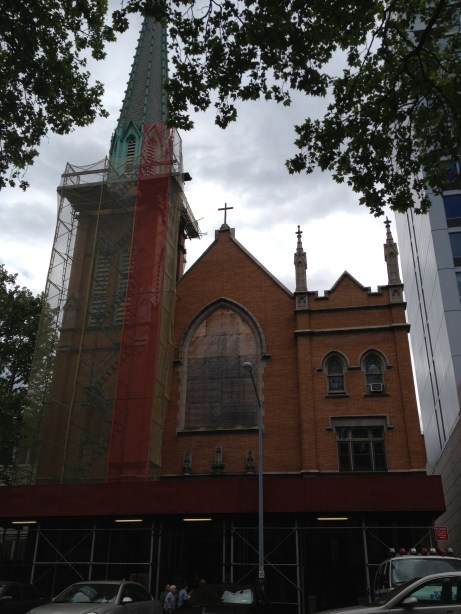
Otra comunidad maravillosamente diversa que visitamos fue la Iglesia Luterana Trinidad de
Manhattan, 164 West 100th Street. La Reverenda Heidi Neumark es su pastora. El Edificio, esta
bien utilizado, la iglesia Trinidad sirve como un faro de la luz de Cristo en su comunidad. El
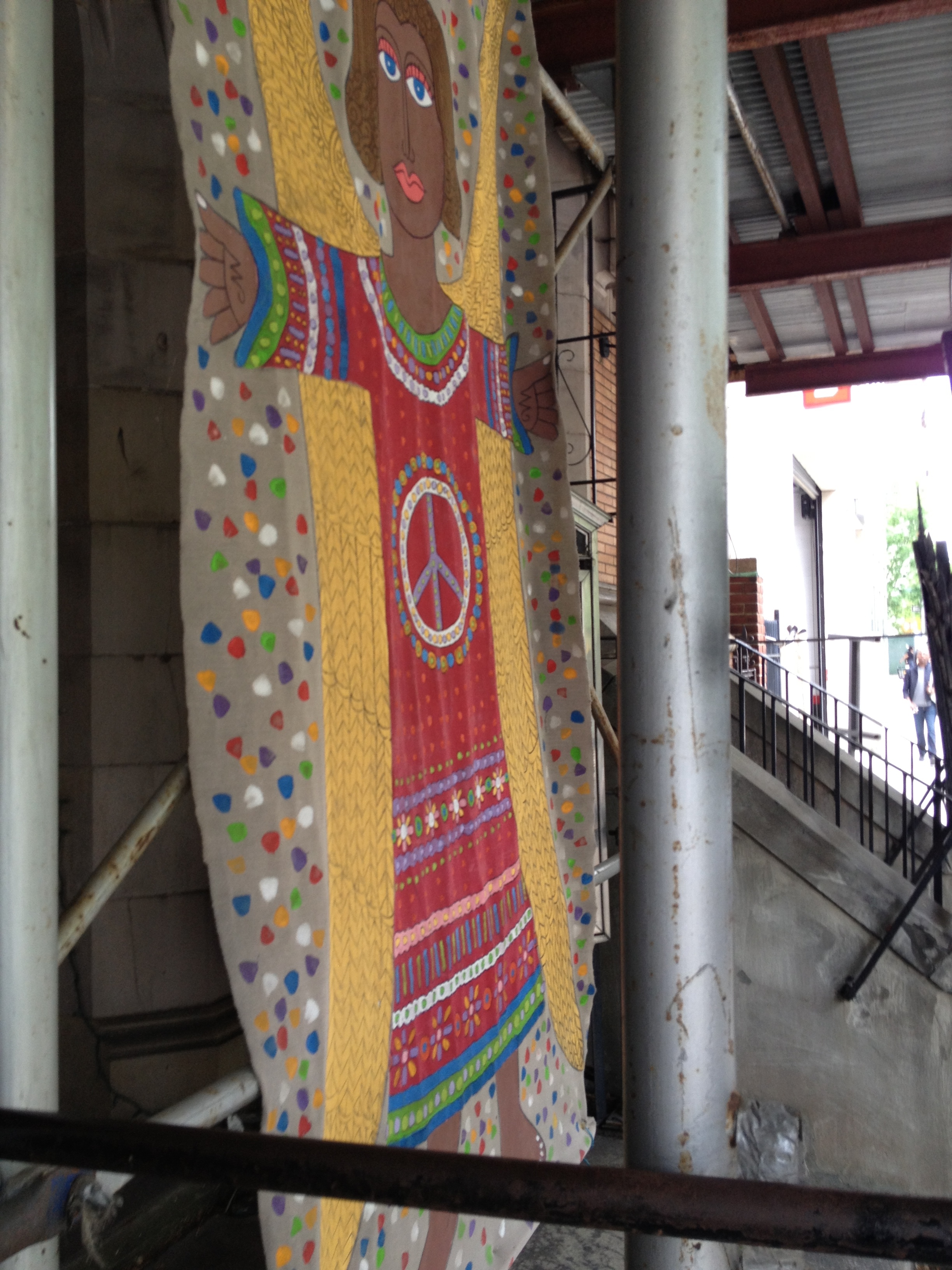
exterior de la iglesia Trinidad, que incluye una torre que pronto vendrá abajo y ventanas tapiadas,
está adornada de colores como banderas de belleza creados por artistas locales que cubren ambos
lados de la entrada del edificio.

IMG_3093 IMG_3095


La Pastora Neumark no parece estar preocupada de que el
campanario se vendrá abajo. Costaría $1,500,000 para repararlo, y ella dice que ese dinero podría
utilizarse de manera más eficaz para el ministerio en la comunidad. Creo que Jesús está
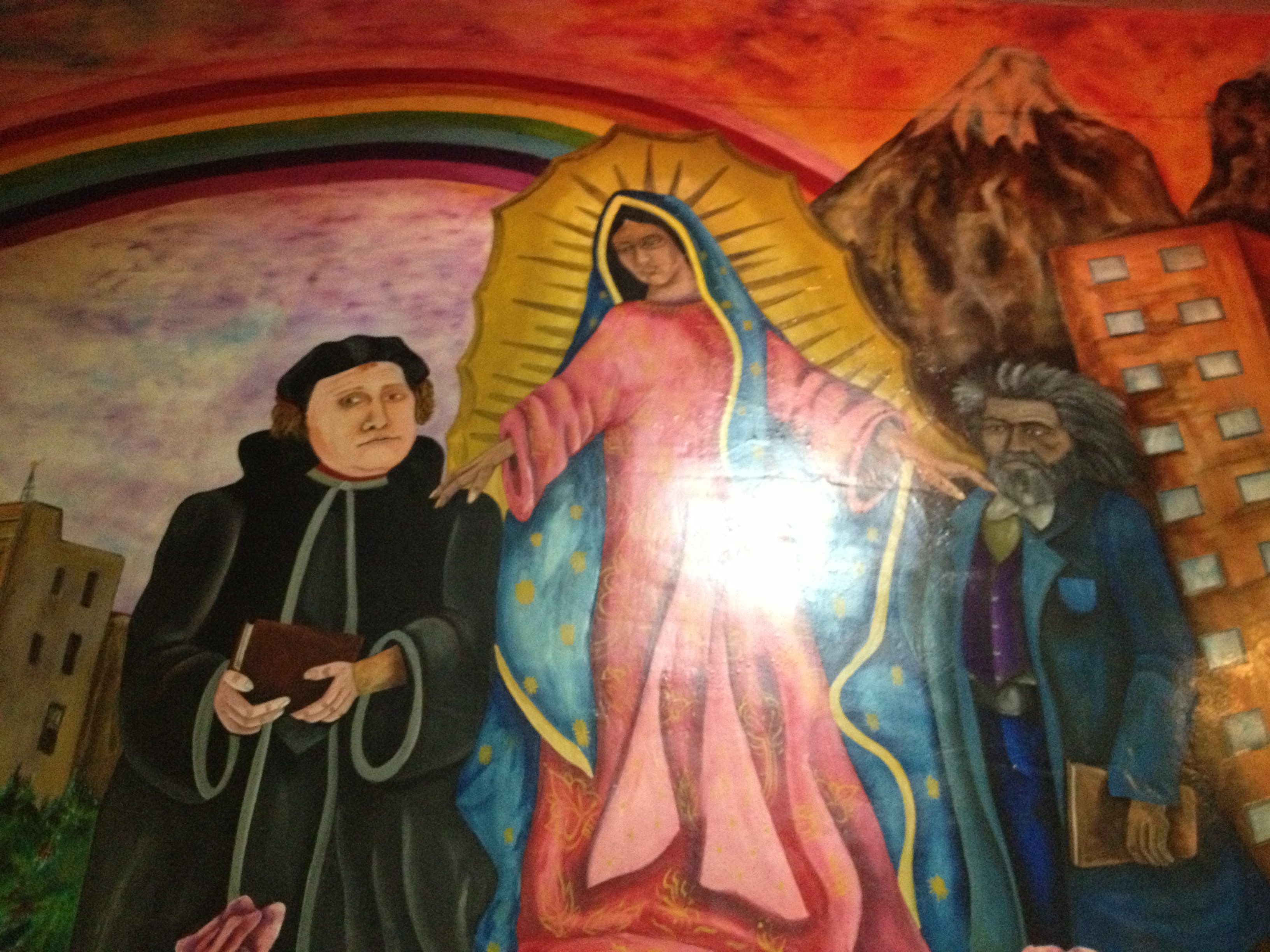
sonriendo a esto. Al entrar en la Iglesia Trinidad, hay un mural que proclama visualmente la
misión de la comunidad: el mural cuenta con una trinidad de Martin Luther, Nuestra Señora de
Guadalupe y Frederick Douglas. La pintura mural resume la historia de la comunidad: fundada
por inmigrantes luteranos (Martin Luther), que ahora incluye una gran población de personas de
origen mexicano (Nuestra Señora de Guadalupe), así como una gran población de
afroamericanos (Frederick Douglas), el mural predica un evangelio de la inclusión y la
diversidad sin necesidad de palabras.

IMG_3078

La Iglesia Trinidad cuenta con un refugio para el pueblo de Dios que no tienen hogar. Sus
miembros provienen de diversos orígenes, razas, etnias y niveles económicos. Tiene un servicio
de adoración para los niños, llamado Culto Wee, un servicio de adoración en inglés y uno en
español.

IMG_3077

La Pastora Neumark hizo su propia traducción para nuestro grupo, fácilmente hacia la
traducción atrás y adelante entre inglés y español, a veces olvidando qué idioma estaba
hablando! Al igual que con Gustavo Adolfo pude ver cómo la inclusión de los líderes de la
iglesia, específicamente los pastores, establece el tono para el resto de la comunidad en términos
de la creación de una iglesia que verdaderamente recibe la gente, de la hospitalidad sagrada, que
en última instancia conduce a una mayor diversidad en la iglesia.

IMG_3085

¿Tal vez nuestros pastores tienen que hacer un entrenamiento intensivo anti-racismo y la inclusión?

Finalmente, el domingo por la mañana nos dividimos en dos grupos y adorábamos en la Capilla
de San Pablo/Iglesia Episcopal, 209 Broadway, y también en Iglesia Memorial de Judson (Iglesia
Bautista y UCC – Iglesia Unida de Cristo), 55 Washington Square St

IMG_3106

Mi grupo fue a la Iglesia

Judson. Una vez más, hemos experimentado una comunidad diversa e inclusiva de la fe, donde la
bienvenida es real y donde reina la hospitalidad sagrada. El culto fue muy interesante, para decir
lo menos. La música incluyó himnos tradicionales, así como una canción de Leonard Cohen
(Anthem) y uno por las Indigo Girls (Closer to Fine). Lo que me gustó de la comunidad, fue que
después del sermón permitieron unos 15-20 minutos para los miembros de la comunidad para
compartir una celebración o una desolación – una alegría o una tristeza. Fue una experiencia
realmente conmovedora, y uno que creo que dibujaría cualquier comunidad más juntos porque
usted vendría a conocer a sus hermanos y hermanas en un nivel más profundo, ya que
compartieron su experiencia personal de la alegría o de tristeza. Creo que voy a tratar de
incorporar esto en la adoración de mi propia comunidad. Además, los ministros de la iglesia
Judson ministran a los estudiantes de la Universidad de Nueva York, y comparten su espacio
para las clases de desbordamiento.

IMG_3156

Judson también tiene un extraordinario programa llamado Fe
en las Artes, que fomenta los artistas emergentes para compartir y desarrollar sus dones. Un
programa que encontré particularmente intrigante ocurre los miércoles por la tarde “el teatro de
la cena,” que literalmente alimenta a la multitud de gente, mientras que al mismo tiempo, alienta
a los dramaturgos y actores emergentes, permitiéndoles realizar sus obras!

IMG_3117

Finalmente, llegué lejos de nuestra aventura Contra el Racismo con una imagen que voy a
utilizar como modelo en el futuro en mi propia vida y ministerio: Dios en el Centro. Cuando
visitamos a la iglesia Gustavo Adolfo, el Pastor Chris y el Diácono John nos invitaron a sentar en
un círculo. Mencionaron que cuando nos reunimos en un círculo siempre recordamos que en el
centro del círculo esta Dios, que nos hace uno.

IMG_5501

Dios en el Centro me impactó profundamente
debido a nuestro trabajo contra el racismo, que identifica “el Centro” de nuestra vida en los
Estados Unidos, en todos nuestros grupos y agencias e instituciones, como el hombre, blanco,
heterosexual, de clase media alta, de Lengua Inglés, etc. Pero para nosotros como personas de fe,
ese NO es “el Centro.” Dios es el Centro. Para nosotros, como Cristianos, Cristo es el Centro.
Esto significa, por supuesto, que todo ser humano, sin importar la raza, el género, el origen
étnico, orientación sexual, nivel económico, o idioma, todo ser humano es igual como una
persona de Dios, en la imago dei, (propia imagen y semejanza de Dios). “Porque todos vosotros
sois uno en Cristo Jesús.” (Gálatas 3:28) Si hay alguna esperanza para la verdadera igualdad,
para la lucha contra el racismo, una verdadera diversidad, para una hospitalidad sagrada, por
todos los seres humanos, para ser tratados con reverencia como pueblo de Dios, es porque Dios,
después de todo, es el verdadero Centro. Demos gracias a Dios.

Pastora Linda Forsberg, Traducido por Eveling Vasquez, Derechos de Autor 03 de junio 2014


God at the Center: An Anti-Racism Adventure, Part 2 (for Spanish Version, scroll up)

1907636_10152051194721433_78505161086977438_n

God at the Center: An Anti-Racism Adventure, Part 2 (For Spanish Version Scroll Up)

“There is a center in US society that is considered normal: white, male, heterosexual, married, Protestant (Christian), Anglo-American, English speaking, upper middle class, able-bodied, educated, middle-aged and embodying a particular standard of beauty. It is the standard by which all are measured. Around this center exist the rest of us – at varying distances. Some of us are closer, and some further apart… The borderlands surround this “center of normalcy.”…The borderlands is a juicy place. It is full of possibilities, chaos, creativity, conflict, beauty. It’s the place where harmony and conflict exist – simultaneously. It’s a place that transcends and defies dualism, where rigid linear reality cannot exist; a place where multiculturalism and diverse identities mix and mingle in a constant ebb and flow of mess, mediation, and mitigation.”
So write Robette Anne Dias and Chuck Ruehle, Executive Co-Directors of Crossroads Ministry in Chicago, (See Link in Sidebar), in their article entitled, “The Borderlands.” Those of us who participated in a recent Anti-Racism Adventure to New York City read and discussed this article as part of our Anti-Racism work together. We also read the first article published by our new presiding bishop, Bishop Elizabeth Eaton, “Learning to Speak a Hard Truth: Needle Barely Moved on ELCA Becoming a Diverse Church.” In truth, this lack of diversity is because the church, like most of our American institutions, lives at this “Center.” Until those of us who live at the “Center” acknowledge our own place of power and privilege, viz., our own “racism,” true diversity will not happen.

IMG_0221
Reading these articles and being part of this Adventure brought me in touch with my own racism, and I had thought I was not a racist person. I do, however, live very close to the “Center.” I am not male, but other than that, I can check off pretty much everything else on the list. In other words, I live from a place of power and privilege which many do not experience. I had a simple realization of my white privilege during our preparation for this trip. Our ministry partners from Gloria Dei Multi-Cultural Ministry in Providence, RI, met with us at First Lutheran Church in East Greenwich prior to our trip, to discuss the above articles. Gloria Dei’s Pastor, the Rev. Santiago Rodriguez, asked us all to introduce ourselves. Most of the folks from Gloria Dei speak Spanish as their primary language. As they introduced themselves in Spanish, Pastor Santiago said, “In English – introduce yourself in English.” One by one, they struggled, to varying degrees, to introduce themselves in English. Then it came to us white, suburban folks from First Lutheran Church of East Greenwich, RI, whose primary language is English. We comfortably introduced ourselves also in English. As we went around the table, a scary thought occurred to me: “I should try to introduce myself in Spanish! After all, I have been studying Rosetta Stone Spanish since my husband gave it to me for Christmas! Why should I sit there in my white privilege and get off easy, introducing myself in my primary language when my sisters and brothers struggled to introduce themselves in a language that is NOT their primary language?” I was so anxious to do this, because I am uncomfortable and embarrassed speaking in my fledgling Spanish, but isn’t that the whole point of our Anti-Racism work together? So, with a faltering voice, I introduced myself in Spanish. My gracious sisters and brothers from Gloria Dei burst into applause, and I felt myself in some small way set free from the shackles of my own white privilege.

IMG_1488
I remembered a time, a few years ago, when I was at the Registry of Motor Vehicles, and an Hispanic young man stood in front of me in the notoriously long, slow-moving line. Finally, when he made it to the front of the line, the DMV worker spoke harshly to him, because he had not filled out the correct papers. When he tried to ask her some questions, it was clear that English was not his primary language. The woman’s treatment of him was shocking to me. After rudely dismissing him, she sweetly called me forward to tend to my matter. I told her that I would work with the man, to help him complete his paperwork. From that point on, she treated me rudely as well. I did not know Spanish at all at that time, but I knew Italian, which is close, so he and I figured it out together, and smiling triumphantly at each other, he filed his paperwork to the rude DMV worker.
How about you, who also live at the “Center”? Whose white skin and education and economic level give you a place of power and privilege you never even have to think about? Have you ever had an eye-opening experience, revealing your own racism? Or do you enjoy being comfortable too much to venture into the uncomfortable, challenging, messy, but glorious, life-giving “Borderlands?”

IMG_3062
While in New York City, our motley crew intentionally ventured into other “Borderlands” places of worship, to try to learn how other communities of faith had created diverse communities, so that we could follow their example in our own places of worship. One such place some of us ventured to was a church near Union Square called Gustavus Adolphus Lutheran Church, 155 E. 22nd Street.. A member of our group had visited Gustavus Adolphus when he visited his son, a student at Cooper Union. He had been pleasantly shocked at the diversity of the congregation: “Never before had I seen such diversity in a Lutheran Church!” (Statistically the ELCA – Evangelical Lutheran Church in America – is 96% white, even after a 25-year pledge to become at least 25% persons of color!)

IMG_3065
We were welcomed into the Gustavus Adolphus’ fellowship Hall, by their Pastor, the Rev. Christopher Mietlowski, and Diaconal Intern, Mr. John Ogren. Pastor Chris told us that many churches hang out a sign which reads, “All Are Welcome,” but few churches actually embody that. In fact, as Pastor Santiago reminded our group, the Rev. Dr. Martin Luther King, Jr., said that the most segregated communities in the United States exist on Sunday mornings – tragically, at churches! Pastor Chris said that when he first came to Gustavus Adolphus, one Sunday morning a homeless woman, carrying her worldly possessions in several bags, ventured into their fellowship hall. One of the church members said to him with chagrin, “Pastor, maybe we should lock the doors, because all of us church members are here, and that way people like this will not be able to get in.” While that is the sentiment of so many members of traditional churches, that is NOT what Jesus, in whose name we gather, was all about. Pastor Chris said that today at Gustavus Adolphus they are committed to “holy hospitality,” where everyone, absolutely everyone, is made to feel truly welcome.

IMG_3070
John Ogren, Diaconal Intern at Gustavus Adolphus, shared his own personal experience of exclusion in the church he grew up in, simply because he is gay. He was so wounded by this personal experience of exclusion based on sexual orientation that he left the church altogether for many years. Then, after September 11, 2001, he felt a deep yearning, as did so many in the United States, to return to a community of faith. He worked near Gustavus Adolphus, and walked by it, day after day. He loves music, and felt the music wafting out of Gustavus Adolphus calling to him. Their commitment to holy hospitality paid off, because once John Ogren entered the church’s doors, he has never left.

The bold commitment of the ELCA to full inclusion of LBTGQ persons in its historic decision of 2009 is something I feel most proud of as a Lutheran. Indeed it was a life-changing experience for me to be at that national church wide assembly when the ELCA made this bold stand. I give thanks to God that my own congregation is truly welcoming to LBGTQ persons. But how many of our churches actually embody this holy hospitality? Conversely, how many have closed their doors on LBGTQ persons, causing wounds that are still oozing with pain?

IMG_3092

Another wonderfully diverse community we visited was Trinity Lutheran Church of Manhattan, 164 West 100th Street. The Rev. Heidi Neumark is its pastor. Trinity’s well-used building serves as a beacon of the Light of Christ in its community. Trinity’s exterior, which includes a steeple that will soon come down and boarded up windows, nevertheless is adorned with beauty as colorful banners created by local artists drape both sides of its entrance.

IMG_3093 IMG_3095

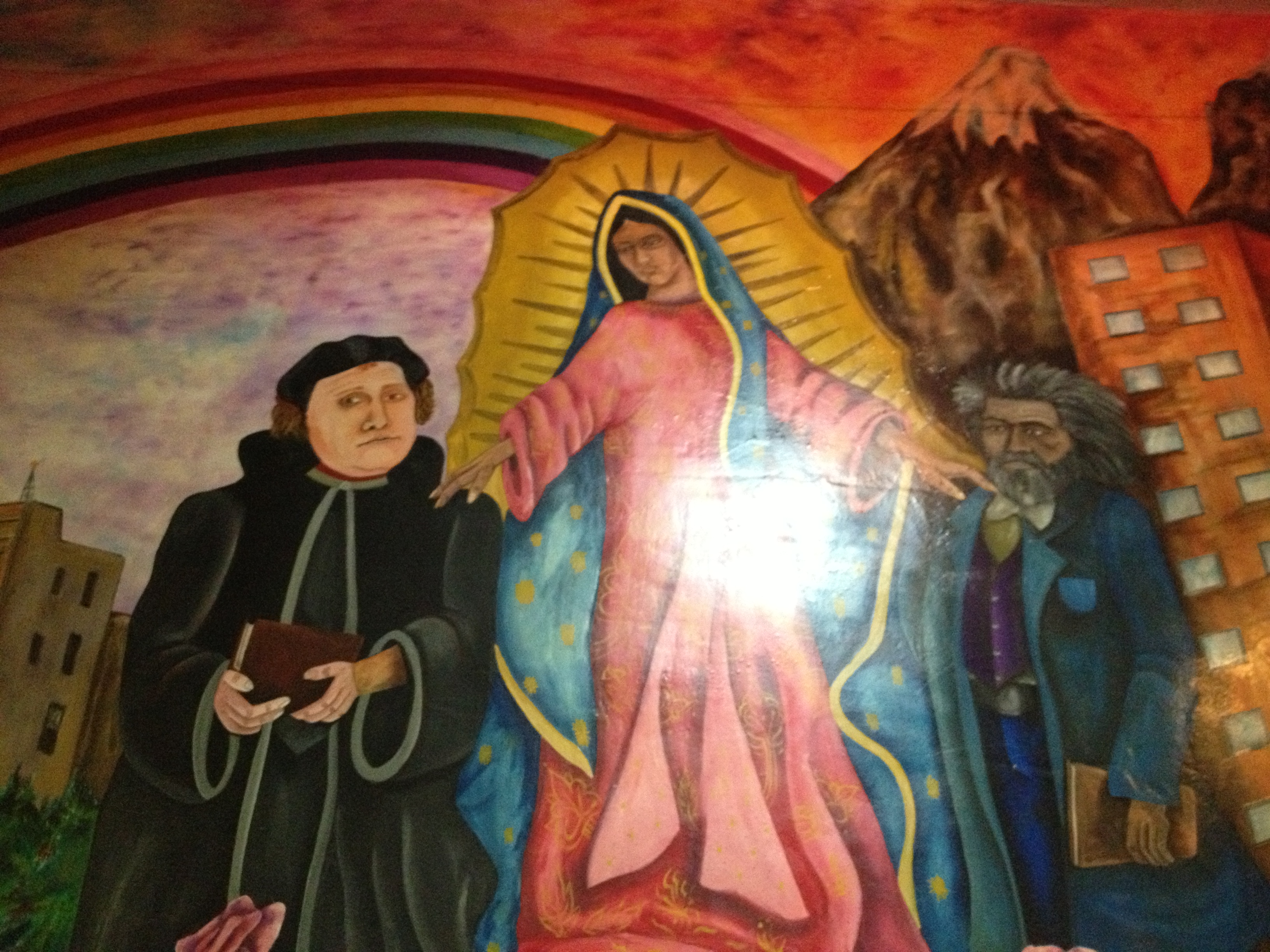
Pastor Neumark does not seem concerned that the steeple will come down. It would cost $1,500,000 to repair it, and she says that this money could be used more effectively for ministry in the community. I think Jesus is smiling at this. Upon entering Trinity, there is a mural which visually proclaims the mission of the community: the mural features a trinity of Martin Luther, Our Lady of Guadalupe and Frederick Douglas. The mural encapsulates the story of the community: founded by Lutheran immigrants (Martin Luther), now including a large population of persons of Mexican descent (Our Lady of Guadalupe), as well as a large population of African Americans (Frederick Douglas), the mural preaches a gospel of inclusion and diversity without needing words.

IMG_3078
Trinity houses a shelter for God’s people who are homeless. Its members come from diverse backgrounds, races, ethnicities, and economic levels. It has one worship service for children, called Wee Worship, one worship service in English and one in Spanish.

IMG_3077

Pastor Neumark did her own translation for our group, easily flowing back and forth between English and Spanish, sometimes forgetting which language she was speaking! As with Gustavus Adolphus I could see how the inclusivity of the church leaders, specifically the pastors, sets the tone for the rest of the community in terms of creating a truly welcoming church, of holy hospitality, which will ultimately lead to a greater diversity in the church.IMG_3085

Perhaps it is our pastors who need to do intensive anti-racism and inclusivity training?

new york play 043
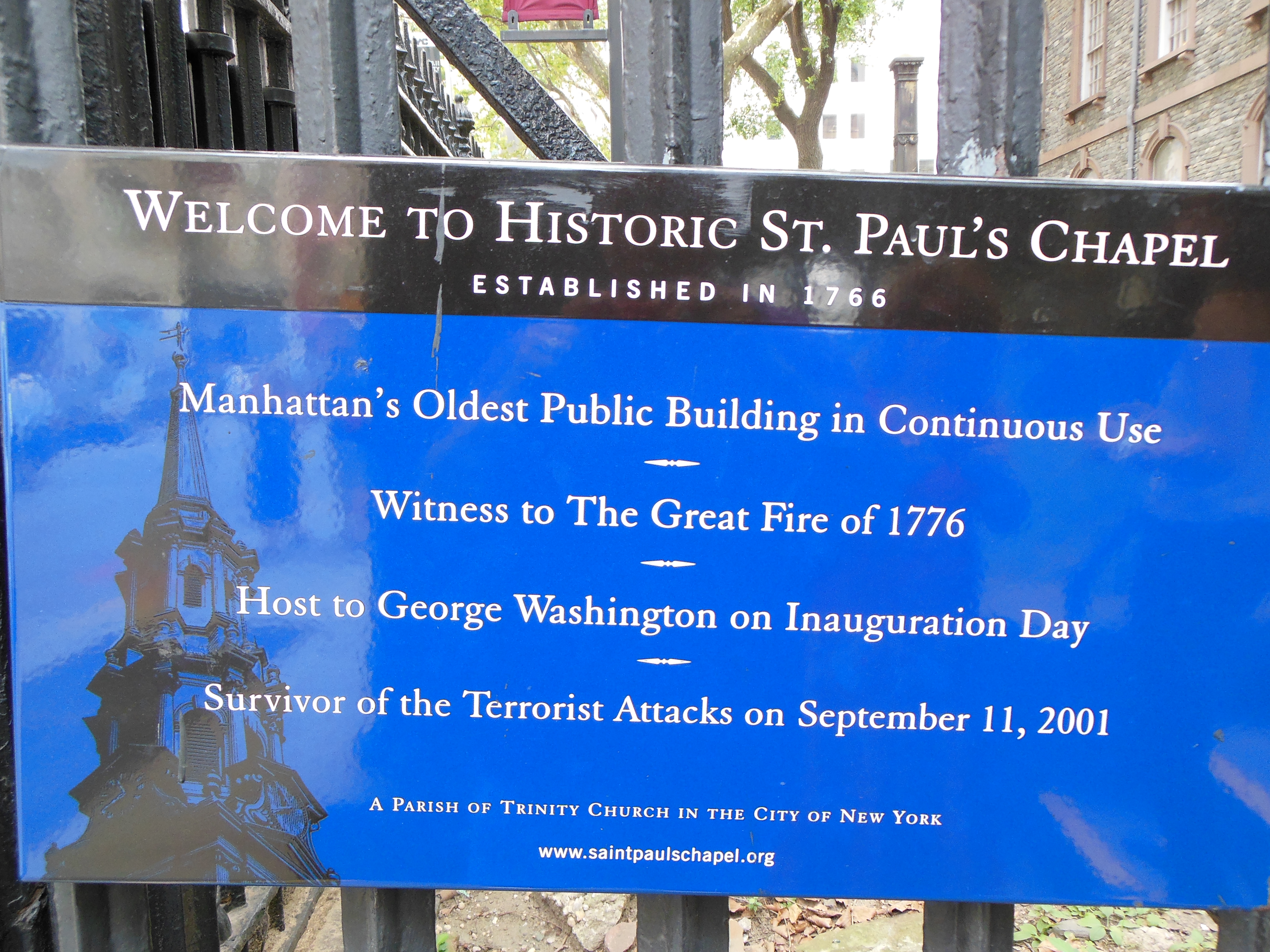
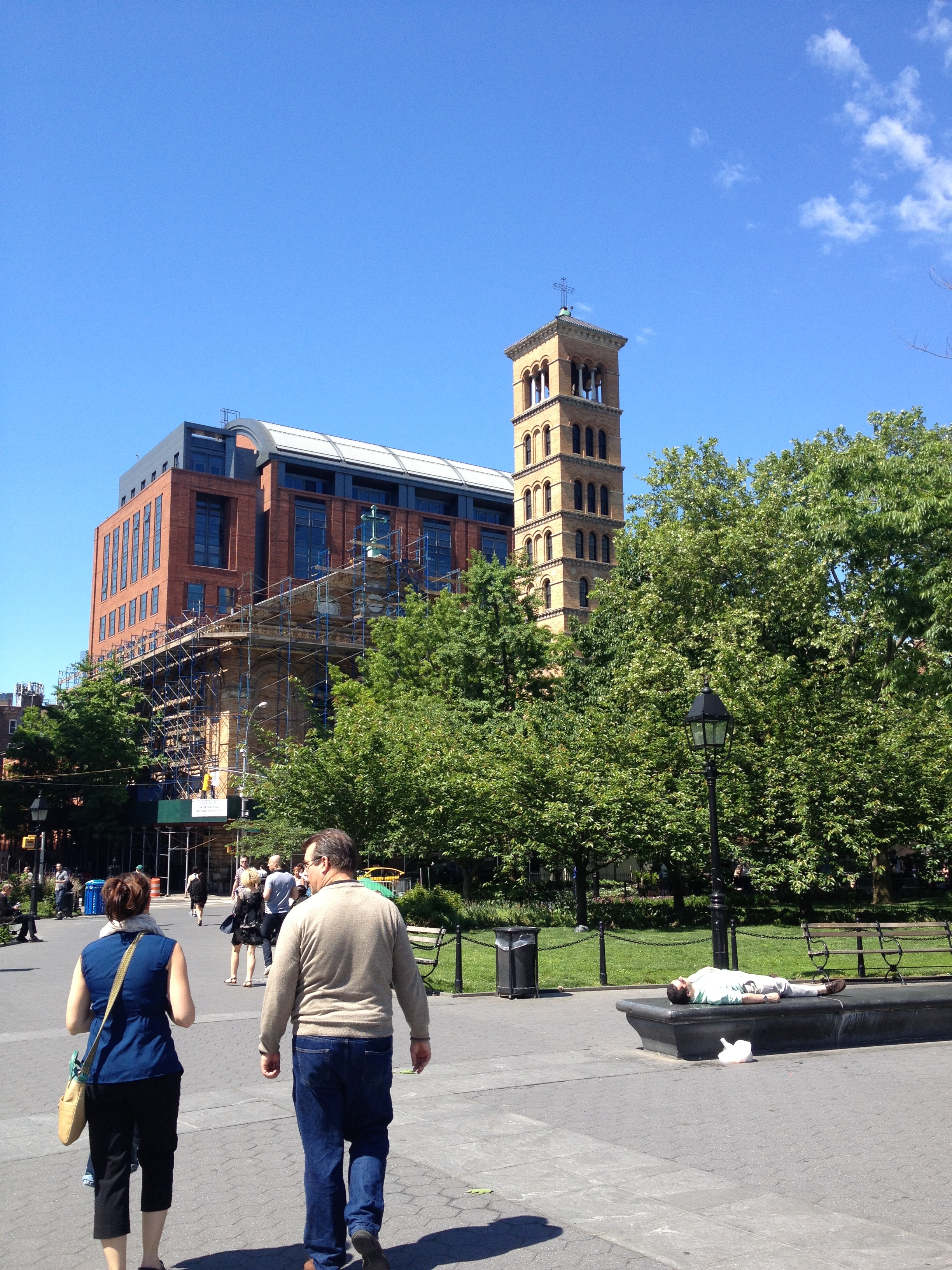
Finally, on Sunday morning we divided into two groups and worshipped at Saint Paul’s Chapel/Trinity Episcopal Church, 209 Broadway, and also at Judson Memorial Church (Baptist and UCC – United Church of Christ), 55 Washington Square S.  My group went to Judson.

IMG_3106

Again, we experienced a diverse and inclusive community of faith, where the welcome is real and where holy hospitality reigns. The worship was very interesting, to say the least. The music included traditional hymns as well as a song by Leonard Cohen (Anthem) and one by the Indigo Girls (Closer to Fine). The thing I really liked about the community, was that after the sermon they allowed about 15-20 minutes for members of the community to share a celebration or a desolation – a joy or a sorrow. It was a truly moving experience, and one which I feel would draw any community closer together because you would come to know your sisters and brothers on a deeper level, as they shared their personal experience of joy or of sorrow. I think I will try incorporating this into the worship of my own community. In addition, Judson ministers right where it is planted, ministering to the students of NYU, and sharing its space for overflow classes.

IMG_3156

Judson also has a remarkable Faith in the Arts program, which fosters emerging artists to share and develop their gifts. A program I found particularly intriguing is a Wednesday evening “dinner theater,” which literally feeds hungry people, while at the same time, encourages emerging playwrights and actors, allowing them to perform their works!

IMG_3117
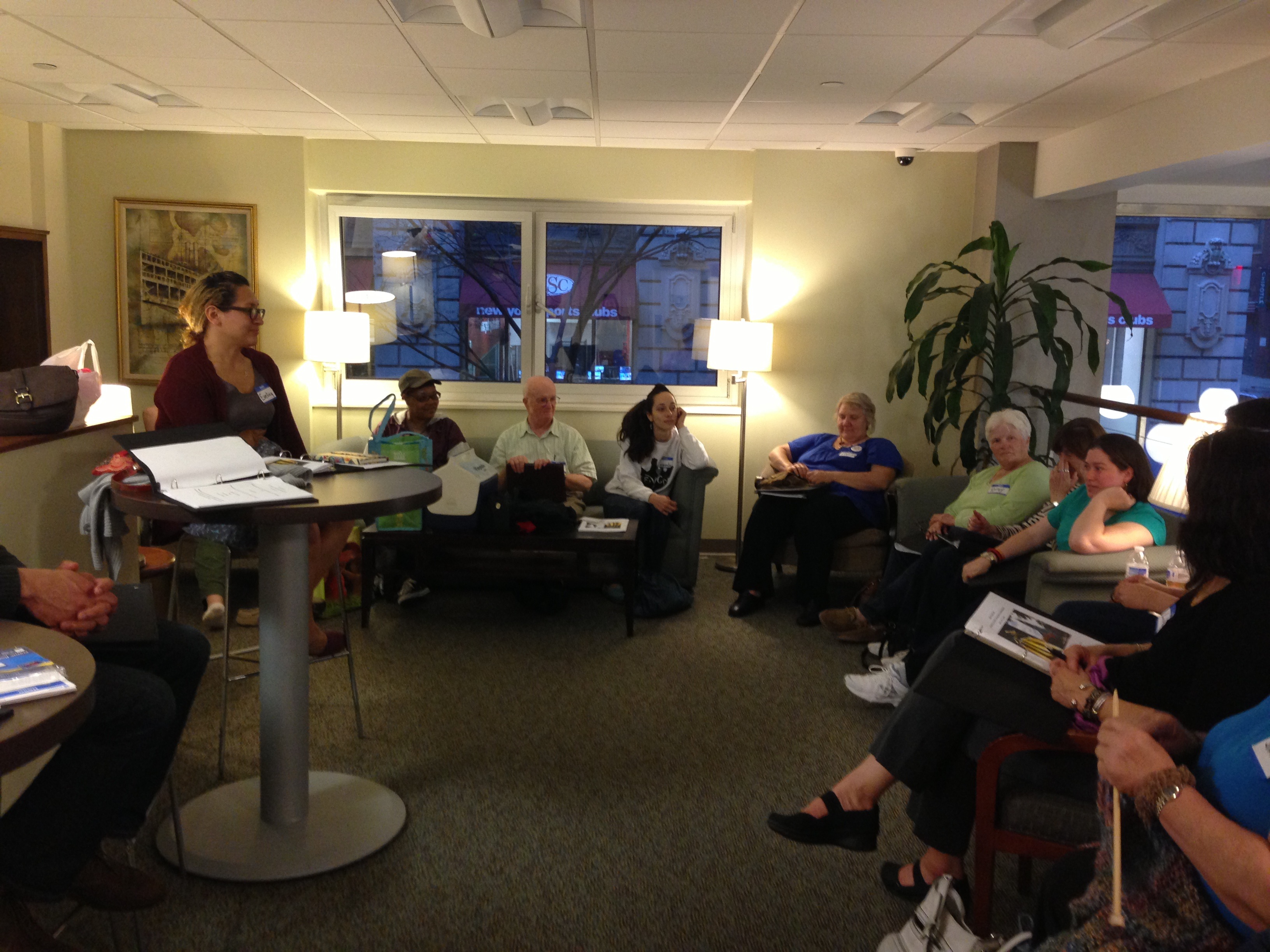
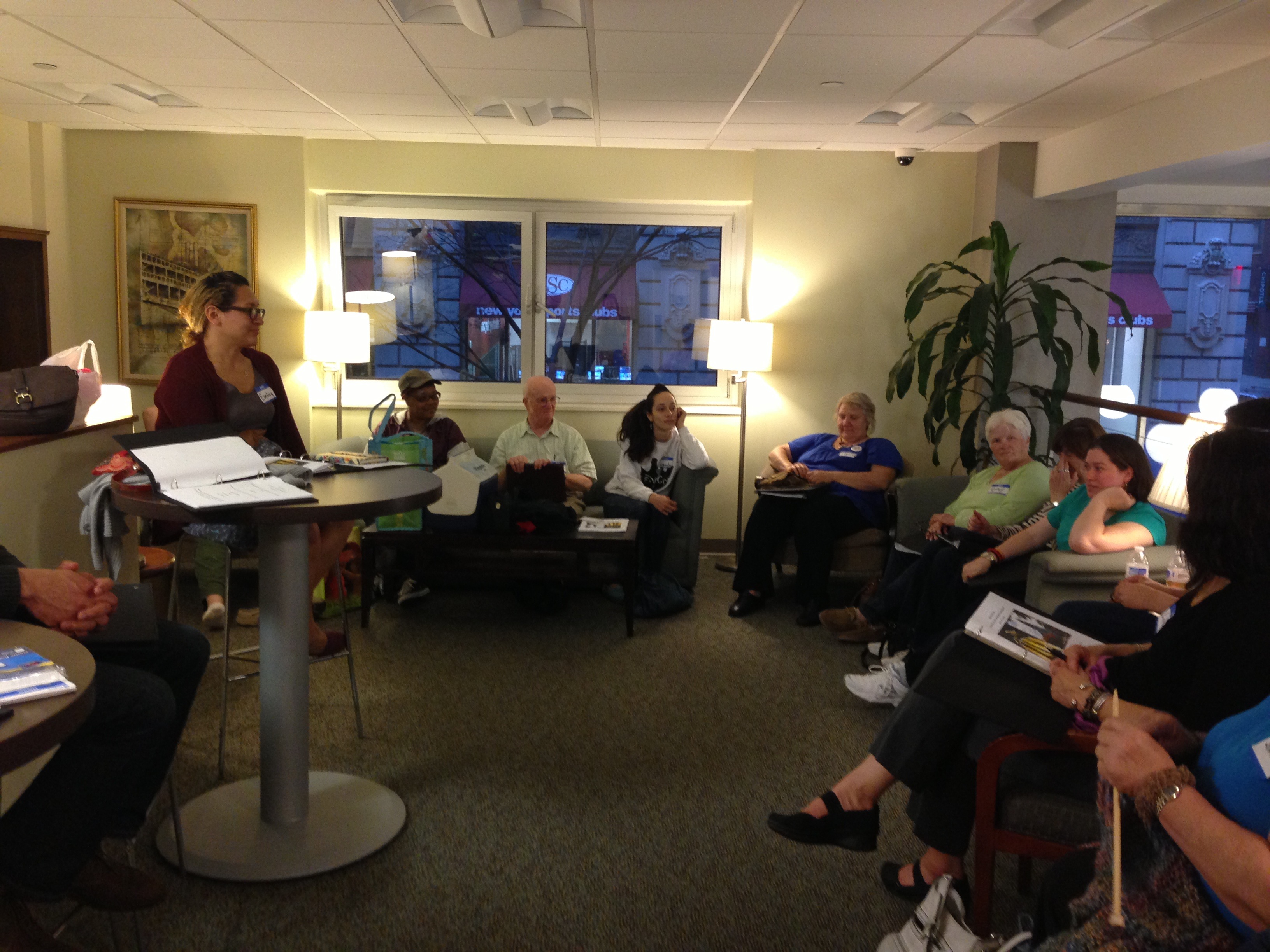
Finally, I came away from our Anti-Racism adventure with an image which I will use as a model going forward in my own life and ministry: God at the Center. When we visited Gustavus Adolphus, Pastor Chris and Deacon John invited us to sit in a circle. They mentioned that when we gather in a circle we always remember that at the center of the circle is God, who makes us One.

IMG_5501

God at the Center struck me profoundly because of our Anti-Racism work which identifies the “Center” of our life in the United States, in all of our groups and agencies and institutions, as white, male, heterosexual, upper middle-class, English-speaking, etc. But no, for us as people of faith, that is NOT the “Center.” God is the Center. For us as Christians, Christ is the Center. This means, of course, that every human being, no matter what race, gender, ethnicity, sexual orientation, economic level or language, every human being is equal as a person of God, in the imago dei, (God’s own image and likeness). “For we are all one, in Christ Jesus our Lord.” (Gal. 3:28) If there is any hope for true equality, for anti-racism, for true diversity, for holy hospitality, for all human beings being treated with reverence as people of God, it is because God, after all, is the true Center. Thanks be to God.

IMG_3102

Pastor Linda Forsberg, Copyright June 3, 2014

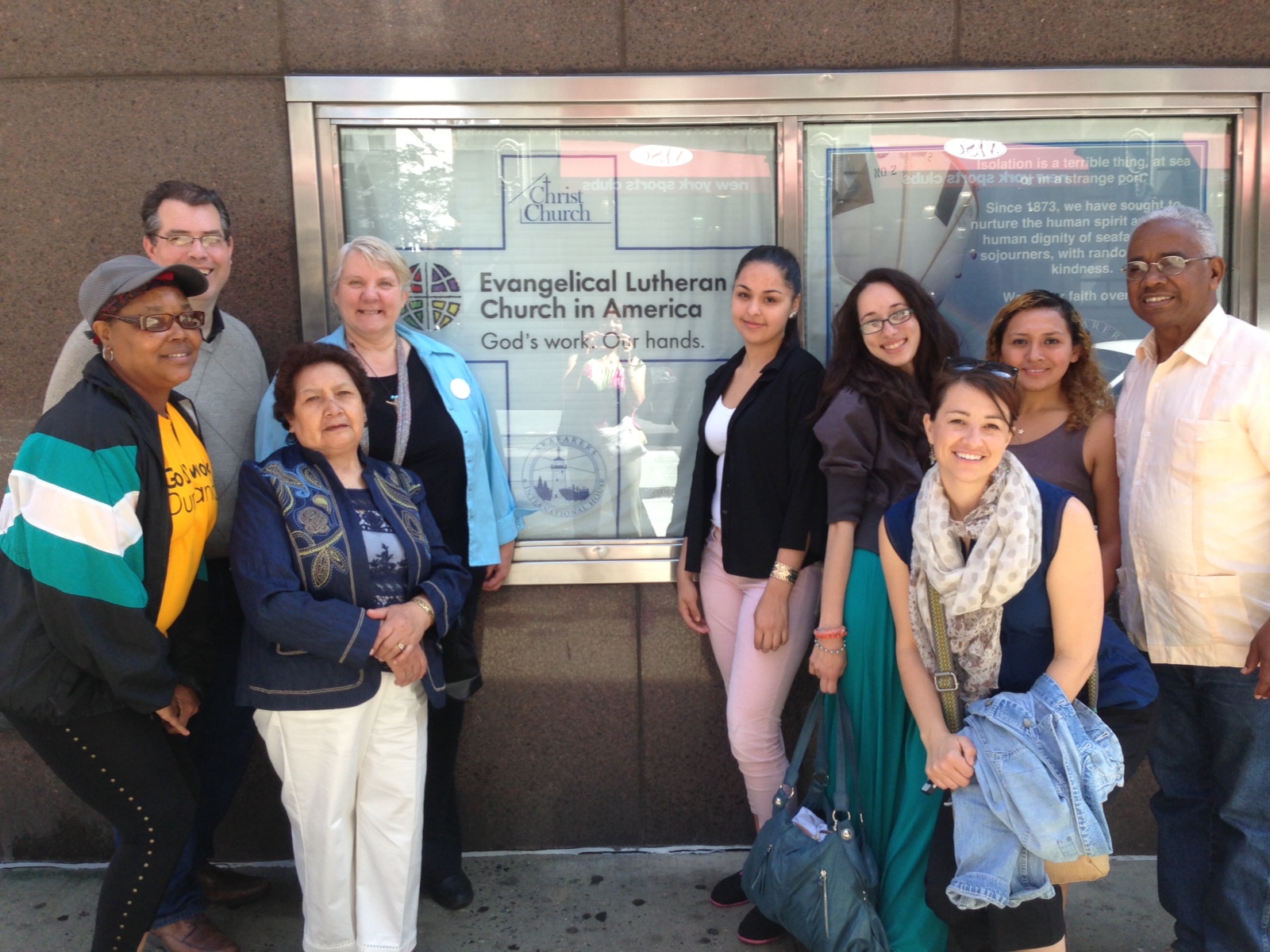
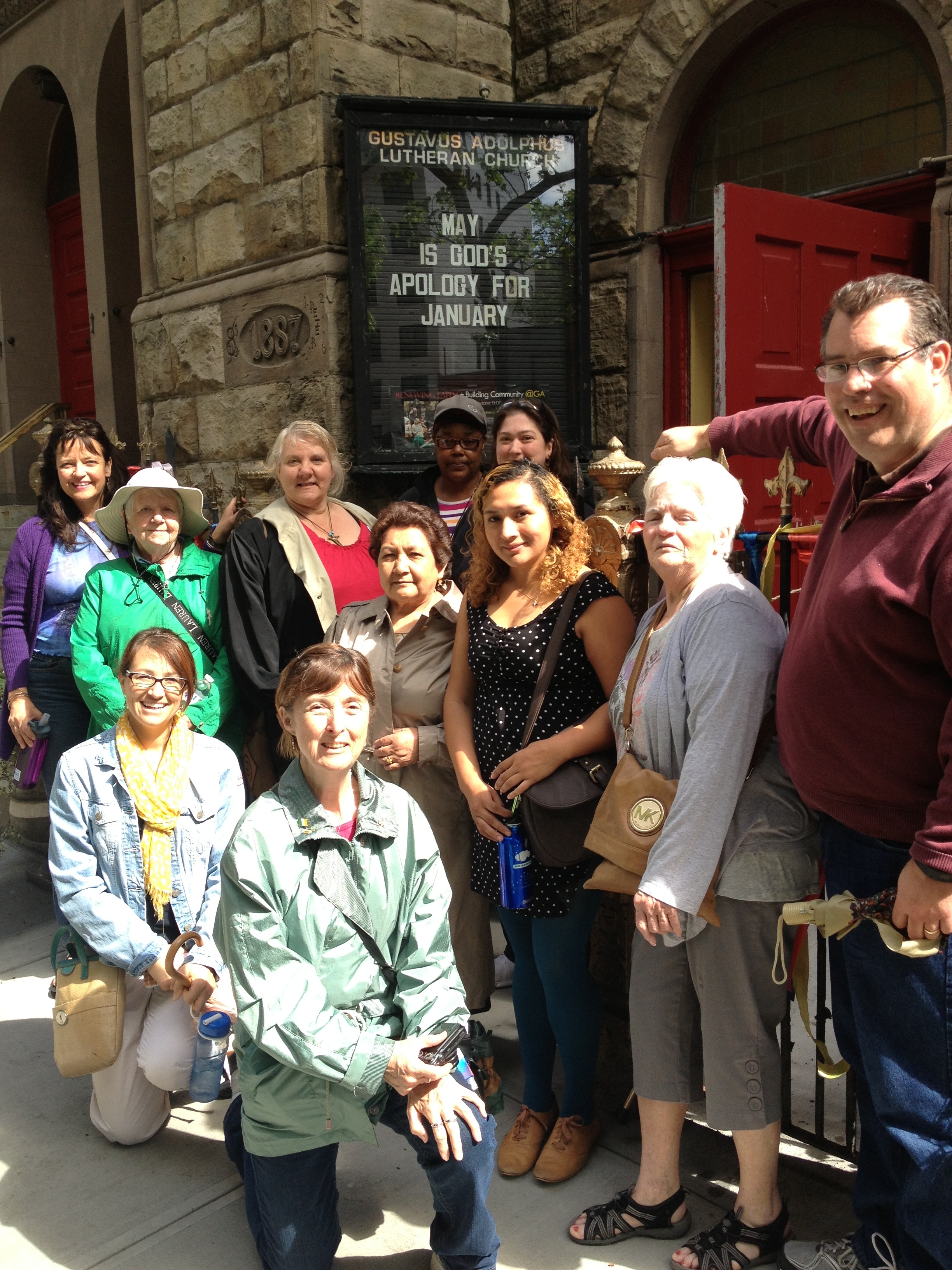
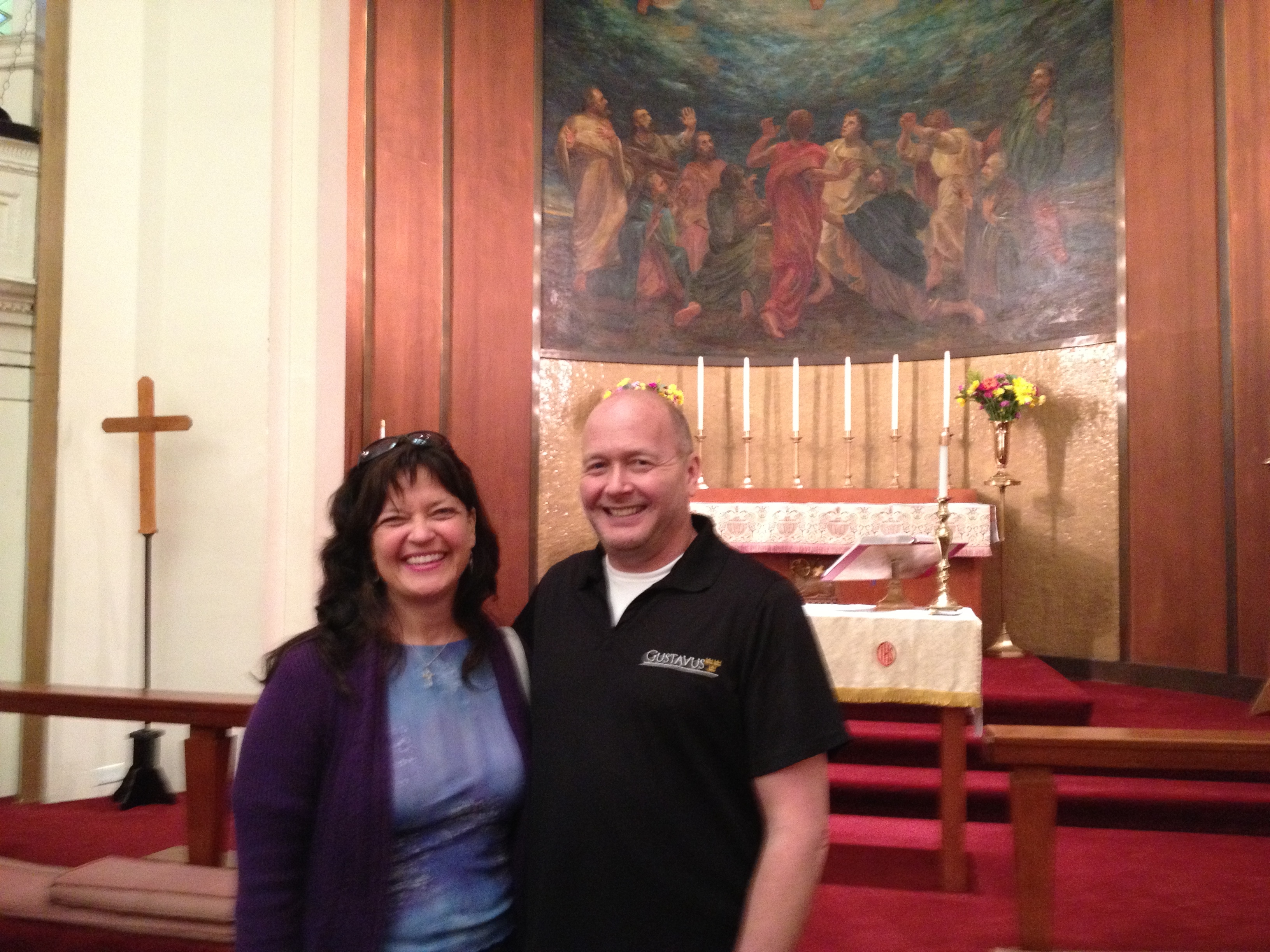
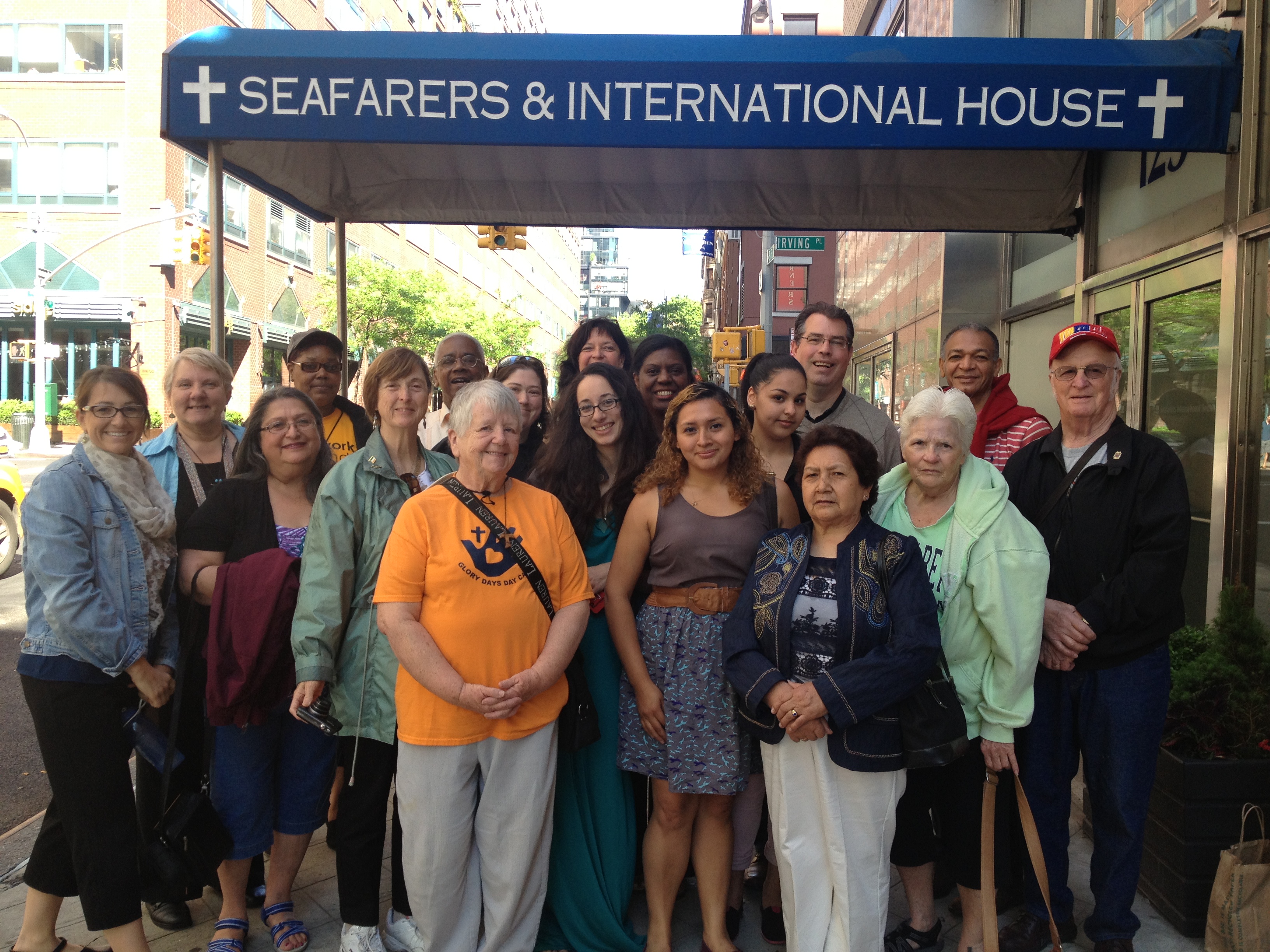
Photos:  My granddaughter Sylvie and my great-grandson Ayden; New York City Skyline, from the Staten Island Ferry;  part of our group outside Seafarer’s International House, Union Square; half our group outside Gustavus Adolphus; Rev. Linda Forsberg, Dave Kulm, and Rev. Chris Mietlowski; Linda Forsberg and John Ogren; Trinity Lutheran Church; Banners outside Trinity Lutheran Church; Mural inside Trinity Lutheran Church; Rev. Heidi Neumark and Mural; Rev. Santiago Rodriquez, Rev. Heidi Neumark and Rev. Linda Forsberg; Saint Paul’s/Trinity Episcopal; Judson Memorial Church exterior;   Judson Memorial Church interior; Judson Memorial Church’s Choir Loft/ Site of Dinner Theater; sitting in a circle in the lounge at Seafarer’s International House; our whole group outside Seafarer’s International House

Dios en el Centro: Una Aventura de Lucha contra el Racismo (Parte 1)

Dios en el Centro: Una Aventura de Lucha contra el Racismo

(Parte 1)  (For English Version, Scroll Down)

IMG_2140

Acabo de regresar de un fin de semana increíble en la ciudad de Nueva York. Fue una aventura contra el racismo, en el que dieciocho personas, de tres iglesias diferentes, participaron en una aventura junta en la ciudad de Nueva York: la Iglesia Luterana Gloria Dei (Providence, RI ); la Iglesia Esperanza Luterana (Hartford, CT) ; y la Primera Iglesia Luterana (East Greenwich, Rhode Island). Dos de estas iglesias – Gloria Dei y la Primera Iglesia Luterana – entró en una alianza hace un año y medio, para trabajar juntos en una asociación de ministerio. Gloria Dei es una iglesia urbana, con un ministerio multicultural, que cuenta con dos servicios de adoración cada fin de semana – una en inglés y otra en español. La Primera Iglesia Luterana es predominantemente blanca, aunque la comunidad es multiétnica, con tres servicios de adoración cada fin de semana, todo en inglés. la Iglesia Esperanza es una iglesia multicultural en Hartford, que se incluyó en esta aventura porque uno de los pastores de Gloria Dei fue recientemente llamado a servir a la Iglesia Esperanza y sentían que también podría beneficiarse de esta aventura contra el racismo.

IMG_3101
Como preparación para esta aventura, los miembros de nuestro grupo leyeron varios artículos sobre el racismo, entre ellos uno de los primeros artículos fue escrito por la nueva presidenta obispa de la ELCA (Iglesia Evangélica Luterana en América), obispa Elizabeth Eaton: “Aprender a hablar una dura verdad: La Aguja apenas se movió en la ELCA a convertirse en una Iglesia Diversa.” En 1988, cuando fue el nacimiento de la ELCA por la unión de las diferentes ramas de los luteranos, el nuevo ELCA se comprometió a convertirse en una iglesia que es al menos un 10% de personas de color para el 2013. En su artículo, la obispa Eaton confesó que eso no ha sucedido. De hecho, la aguja apenas se ha movido. Hemos pasado de ser una iglesia que es el 97% de raza blanca de ser una iglesia que es 96% blanca en veinticinco AÑOS! ¿Por qué es la diversidad tan difícil?
Junto con el artículo de la obispa Eaton, el grupo leo otro artículo, “Las Tierras Fronterizas,” escrito por Anne Robette Dias y Chuck Ruehle, Co-Directores Ejecutivos del Ministerio Crossroads, en Chicago. Aunque habíamos leído varios artículos, estos dos artículos fueron la base de nuestras conversaciones juntas. El objetivo de Crossroads Ministerio es “construir y mantener equipos vitales de transformación antirracistas en nuestras instituciones” (eso incluye la ELCA, y nuestras congregaciones individuales también). En su página de internet, Crossroads diserta su lema como: “El racismo nos deshumaniza a todos – Desmontando el racismo nos cura.” El artículo comienza así: “Hay un centro en la sociedad EE.UU. que se considera normal: el hombre, blanco, heterosexual, casado, Protestante (Cristiano), que domine el inglés, de clase media alta, que sea Anglo-Americano, sano, educado, de mediana edad y que ademas incorpore una belleza estándar. Este es el estándar por el cual todos son medidos. Alrededor de este centro estamos el resto de nosotros – a diferentes distancias. Algunos de nosotros estamos más cerca, y otros más lejos… Las tierras fronterizas rodean este “centro de la normalidad”… La región fronteriza es una zona llena de sabor. Está llena de posibilidades, el caos, la creatividad, el conflicto, y hasta la belleza. Es el lugar donde la armonía y el conflicto existen al mismo tiempo. Es un lugar que trasciende y desafía el dualismo, donde no puede existir la realidad lineal rígida; un lugar donde la multiculturalidad y la diversidad de identidades se constantemente mezclan y se mezclan en un ir y venir de lío, mediación y mitigación.”
En este artículo se afirma que la mayoría de nuestras instituciones Americanas existen en el centro, y operan desde ese lugar. La iglesia, que significa nuestra propia ELCA, se encuentra en este centro. Incluso nuestra propia obra contra el racismo, a veces opera desde este lugar, esperando que los que no están en el centro, para que vengan y se ajusten a las formas y los valores del centro, en otras palabras, que se asimilen. Los que están en el centro nunca piensan acerca de aventurarse en las zonas fronterizas, donde podríamos ser vulnerables y confundidos, pero donde nuevas posibilidades abundan.
El propósito de nuestro viaje a la ciudad de Nueva York fue viajar a un lugar que fuera desconocido para todo nosotros, un lugar marginal, donde no hay un centro definido. Era para entrar al desordenado, sin embargo bello lugar de la creación, transformación, un nuevo nacimiento en conjunto, en condiciones de igualdad.

IMG_3072
Yo misma crecí en la iglesia Luterana de San Pablo en el sur de Providence, Rhode Island; una iglesia luterana alemana, que se encuentra en medio de una de las comunidades más diversas que he experimentado. Como estudiante universitaria fui contratada por mi congregación a hacer alcance comunitario a los niños y jóvenes de esta comunidad multicultural.Después, como una estudiante de posgrado en la Escuela de Divinidad en Harvard (1981-1986), hice estudio educativo en la Iglesia de Nuestro Salvador Luterana en Dorchester, MA, (que ahora se llama Intersección ), que también es una comunidad muy diversa y urbana. Cuando me reuní con el hombre que en ese momento se desempeñó como jefe de la comisión de coordinación del Sínodo de Nueva Inglaterra, me preguntó qué luchas tuve con la Iglesia Luterana. Recité varias cosas, todas las cuales tenían que ver con nuestra falta de diversidad. Este hombre respondió: “Bueno, si quieres ser ordenada en esta iglesia, que, por supuesto tienes que dejar ir a esas luchas.” En otras palabras, yo tendría que aceptar los caminos del centro. Esto era tan inquietante para mí que me fui de la Iglesia Luterana en ese momento, y en 1986 fui ordenado en la Iglesia Unida de Cristo, porque en ese momento parecían, a mí, a vivir más plenamente en las tierras fronterizas. Después de servir durante cinco años como pastora UCC, la ELCA me invitó, y se disculpó por la experiencia que había tenido con el jefe del comité de coordinación. Lo que no puedo olvidar, sin embargo, es que, irónicamente, la lista de elementos que destacan nuestra falta de diversidad que yo a los 25 años de edad había identificado, son las mismas cosas con las que luchamos ahora 25 años más tarde.

IMG_3104
¿Por qué en 25 años no miramos ningún cambio? La razón es porque la mayoría de nosotros todavía vivimos y operamos en el centro. Consideremos, por ejemplo, nuestro modelo de los “viajes misióneros.” Sé que muchos de ustedes se van a encontrar en la ofensa. Pero ha habido muchas críticas respecto a los “viajes misioneros,” donde los blancos suburbanos pasan una o dos semanas sumergidos en otra cultura. Digamos que un grupo de 25 sin capacitados, blancos suburbanos, que solo hablan Inglés, gastan $2,000 cada uno para viajar a Centroamérica para construir una estructura de mala calidad para los pobres de esa comunidad, para que puedan regresar a sus vidas en el centro, a sentirse mejor acerca de sí mismos, porque que han “ayudado a esa pobre gente.”
¿Qué tal si en vez entramos a la zona fronteriza a unos cuantos kilómetros de donde vivimos y tenemos algunas conversaciones difíciles sobre el racismo? ¿Qué tal si nos humillamos un poco y nos tropezamos luchando para aprender otros idiomas, no asumir que todos deben aprender a hablar el nuestro? ¿Qué pasa si en lugar utilizamos los $50,000 dólares que se gasta en nuestro viaje por uno de esos “viajes misioneros” y participamos en una conversación de dos vías con la gente de Centro América preguntándoles que realmente necesitan, y luego usamos esos $50,000 dólares para invertir en la infraestructura de la comunidad indígena, animando y ayudando a desarrollar el liderazgo entre los miembros de la propia comunidad, utilizando mano de obra local que es calificada, contribuyendo al desarrollo económico de la comunidad fronteriza, y ayudándolos a crear cambios que sea más duradera?
Por que es debido a que en el centro queremos hacer las cosas a nuestra manera? Nosotros queremos imponer las formas y valores del centro, por si quieren nuestra ayuda o no.
De esta aventura contra el racismo aprendí muchas cosas, pero, ante todo, me enteré de que para nosotros, como personas de Fe el punto de partida es que tenemos un “centro” diferente. Para nosotros el centro no es un hombre blanco, de lengua Inglés, heterosexual, etc. Para nosotros, el centro es: Dios, Cristo, y el Espíritu Santo. Cuando Dios está en el centro de las cosas, todo cambia. “Ya no hay judío ni griego; no hay esclavo ni libre; no hay varón ni mujer; porque todos vosotros sois uno en Cristo Jesús.” (Gálatas 3:28) En el blog de la semana que viene voy a explorar algunas realizaciones reveladores específicas sobre el racismo. Por ahora permítanme concluir diciendo que al final de nuestra aventura, se nos pidió resumir nuestra experiencia en una sola palabra. Las palabras que nombramos fueron: Familia (family), Comunidad (Community) y Esperanza (hope). Sólo con Dios en el centro son estas cosas posibles.

IMG_3079

Pastora Linda Forsberg, Translated by Eveling Vasquez, Copyright May 27, 2014
God at the Center: An Anti-Racism Adventure

God at the Center: An Anti-Racism Adventure (Part 1)

IMG_2140


I just returned from an amazing weekend in New York City. It was an anti-racism adventure, in which eighteen people, from three different churches, participated in an adventure together in New York City: Gloria Dei Lutheran Church (Providence, RI); Grace Lutheran Church (Hartford, CT); and First Lutheran Church (East Greenwich, RI). Two of these churches – Gloria Dei and First Lutheran – entered a partnership one and a half years ago, to work together in a ministry partnership. Gloria Dei is an urban, multi-cultural ministry, which has two worship services each weekend – one in English and one in Spanish. First Lutheran is a predominately white, though multi-ethnic community, with three worship services each weekend, all in English. Grace Lutheran Church is a multi-cultural church in Hartford, who was included in this adventure because one of Gloria Dei’s pastors was recently called to serve at Grace Lutheran, and felt that Grace Lutheran could benefit from this anti-racism adventure as well.

IMG_3101
As preparation for this adventure, members of our group read several articles about racism, including one of the first articles written by the new presiding bishop of the ELCA (Evangelical Lutheran Church in America), Bishop Elizabeth Eaton: “Learning to Speak a Hard Truth: Needle Barely Moved on ELCA Becoming a Diverse Church.” In 1988, when the ELCA was birthed by the coming together of different branches of Lutherans, the new ELCA pledged itself to become a church that is at least 10% persons of color by 2013. In her article, Bishop Eaton confessed that that has NOT happened. In fact, the needle has barely budged. We have gone from being a church that is 97% white to being a church that is 96% white – in twenty-five YEARS! Why is diversity so difficult?
Along with Bishop Eaton’s article, we read another article, “The Borderlands,” written by Robette Anne Dias and Chuck Ruehle, Executive Co-Directors of Crossroads Ministry, in Chicago. Although we read several other articles, these two articles were the foundation for our conversations together. Crossroads Ministry’s goal is to “build and maintain vital anti-racism transformation teams in our institutions” (that means the ELCA, and our individual congregations too). On their website, Crossroads holds forth this quote as their motto: “Racism dehumanizes us all -Dismantling racism heals us all.” The article begins:
“There is a center in US society that is considered normal: white, male, heterosexual, married, Protestant (Christian), Anglo-American, English speaking, upper middle class, able-bodied, educated, middle-aged and embodying a particular standard of beauty. It is the standard by which all are measured. Around this center exist the rest of us – at varying distances. Some of us are closer, and some further apart… The borderlands surround this “center of normalcy.”…The borderlands is a juicy place. It is full of possibilities, chaos, creativity, conflict, beauty. It’s the place where harmony and conflict exist – simultaneously. It’s a place that transcends and defies dualism, where rigid linear reality cannot exist; a place where multiculturalism and diverse identities mix and mingle in a constant ebb and flow of mess, mediation, and mitigation.”
This article claims that most of our American institutions exist at the center, and operate from that place. The Church, that means our own ELCA, is at this center. Even our anti-racism work itself, sometimes operates from this place, expecting those who are not at the center, to come to and conform to the ways and values of the center, in other words, to assimilate. Those in the center never think about venturing into the borderlands, where we might be vulnerable and confused, but where new possibilities abound.
The purpose of our New York City trip together was to travel to a place which is unfamiliar to all of us, a liminal, marginal place, where there is no defined center. It was to enter the messy, beautiful place of creation, transformation, and new birth together, on more equal footing.

IMG_3072
I myself grew up at Saint Paul’s Lutheran Church in South Providence, RI, a German Lutheran Church, which was located in the midst of one of the most diverse communities I have ever experienced. As a college student I was hired by my congregation to do outreach among the children and youth of this multi cultural community. Then as a graduate student at Harvard Divinity School, (1981-1986) I did field education at Our Saviour’s Lutheran Church in Dorchester, MA, (now called Intersection), also a diverse urban community. When I met with the man who at that time served as the head of the New England Synod’s ordination committee, he asked me what struggles I had with the Lutheran Church. I rattled off several things, all of which had to do with our lack of diversity. This man responded, “Well, if you want to be ordained in this church, you will of course have to let go of these struggles.” In other words, I would have to accept the ways of the center. This was so disturbing to me that I left the Lutheran Church at that time, and in 1986 was ordained into the United Church of Christ, because at that time they seemed, to me, to live more fully in the borderlands. After serving for five years as a UCC pastor, the ELCA invited me back, and apologized for the experience I had had with the head of the ordination committee. What I can never forget, however, is that ironically,the list of items highlighting our lack of diversity which I at 25 years old had identified, critiqued the very same things with which we struggle now 25 years later.
Why has nothing changed in 25 years? Because most of us still live and operate at the center. Consider, for example, our model of “mission trips.” I know many of you will find this offensive. But there have been many critiques of “mission trips,” where white suburban folks spend a week or two immersing themselves in another culture. Say a group of 25 unskilled, English speaking suburban white folks spend @$2000 each to travel to Central America to build a shoddy structure for the poor of that community, so that they can return to their lives at the center, feeling better about themselves because they have “helped those poor people.”
What if instead we entered the borderlands a few miles from where we live and have some difficult conversations about racism? What if instead we humbled ourselves to stumble along struggling to learn other languages, not assuming everyone should learn to speak ours? What if instead we used the $50,000 we spent on our travel for one of these “mission trips” and had a two-way conversation with the folks from Central America asking them what they truly need, and then using that $50,000 to invest in the infrastructure of the indigenous community, encouraging and helping to develop leadership among members of the community itself, using local skilled laborers, contributing to the economic development of the borderlands community, and helping them to create changes that are more lasting?

IMG_3104
Because we at the center want to do things our way? Want to impose the ways and values of the cneter, whether they want our help or not?
From this Anti-Racism adventure I learned many things, but first and foremost I learned that for us as people of faith the starting point is that we have a different “center.” For us the center is not white, male, English-speaking, heterosexual, etc. For us the center is: God, Christ, the Holy Spirit. When God is at the center of things, everything shifts. “For there is no longer Jew nor Greek, there is no longer slave nor free, there is no longer male nor female, for all are one in Christ Jesus our Lord.” (Galatians 3:28) In next week’s blog I will explore some specific eye-opening realizations about racism. For now let me close by saying that at the close of our adventure together, we were asked to sum up our experience in one word. The words we named were: familia (family), communitas (community) and esperanza (hope). Only with God at the center are these things possible.

Pastor Linda Forsberg, Copyright May 27, 2014

IMG_3079

Spiritual but not Religious?

Spiritual but not Religious?

I love to travel. I especially love hiking adventures. Before he met me my husband never hiked, or travelled. Now, when we arrive at our destination, my husband scans the area for the point of highest elevation, sighs, and prepares himself, knowing we will be hiking up to that highest point!

grand canyon1 088

So three years ago when I celebrated the 25th anniversary of my ordination, I went on my very first sabbatical. As part of my sabbatical my husband and I spent a month traveling inTurkey and Greece,on a pilgrimage which followed in the footsteps of Saint Paul. Saint Paul is the author or at least main figure behind most of the New Testament. Saint Paul covered a lot of territory! We did a lot of hiking. Surprisingly, in Turkey, a country which today is 90% Muslim, most people have heard about Saint Paul. Our young guide, himself Muslim, had studied Saint Paul in great depth. Everywhere we went in Turkey, people directed us to the various sacred sites where Saint Paul had travelled.

Ted Top All Time  303 Pictures-5

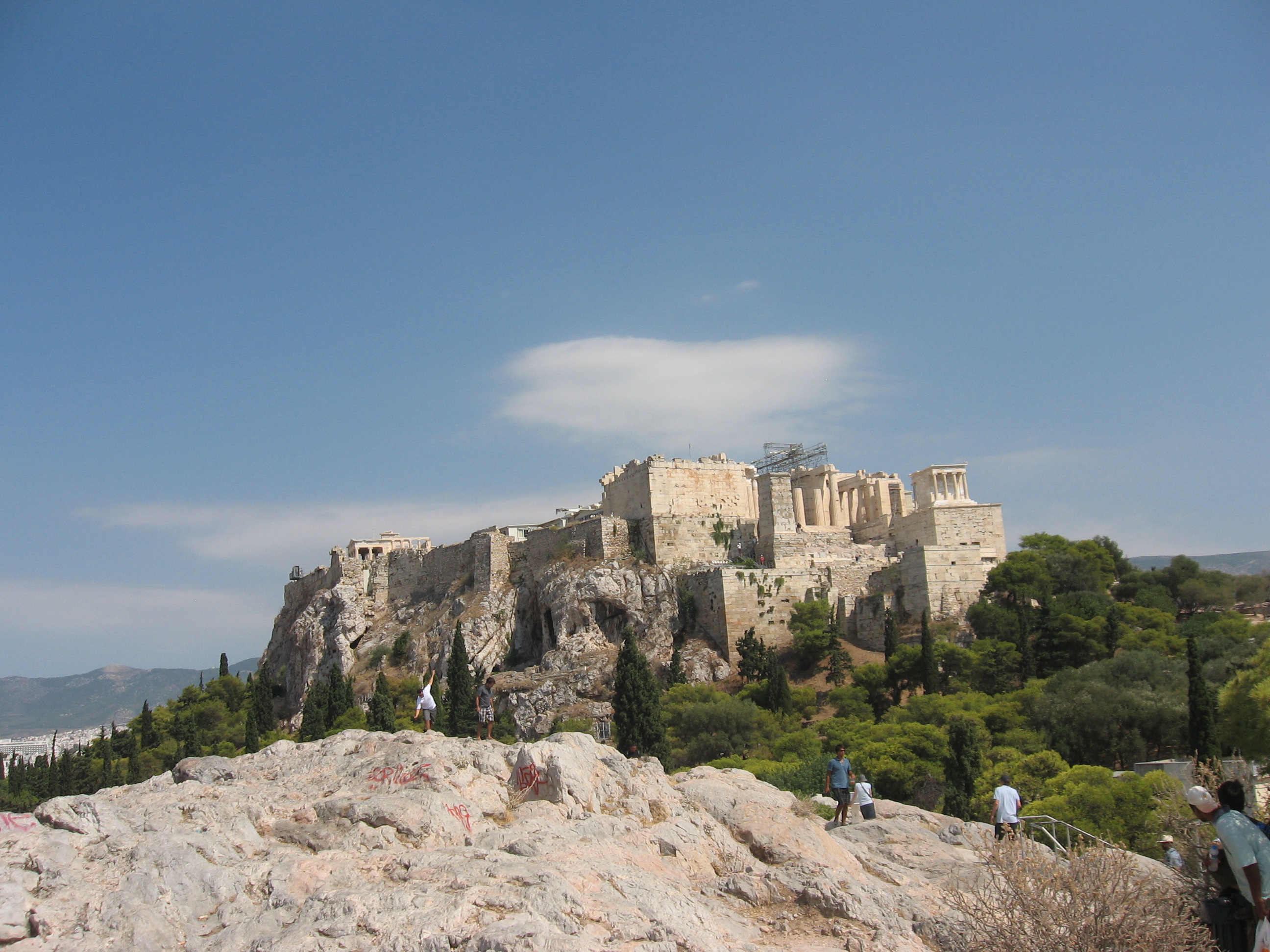
In Greece, ironically, a mostly Christian country, where most people are Greek Orthodox, people seemed to never have heard of Saint Paul! When I was in Athens, much to my dismay, no one had a clue as to where the Areopagus was!

DSCN1956

People looked at me as if I was an alien. Having just hiked up to the acropolis, and getting our obligatory photograph in front of the parthenon, my husband was not too thrilled when at last I found one solitary person who actually had heard of the Areopagus, and pointed UP. My husband said, “I’ll sit this one out, and wait for you down here.” So UP I went.

Greece & Turkey 3 155


When I reached the top it seemed that I was the only one who was there because of Saint Paul. Everyone else just seemed to like the view of the acropolis from there. I met a young man from Italy who took my picture standing where I imagine Paul had stood when he looked to his right and saw the acropolis with its many temples: one to Athena, one to Zeus, one to Apollo, and so on.

Greece & Turkey 3 154

Paul said, “Oh Athenians, I can see how extremely religious you are in every way. For as I went through the city and looked carefully at the objects of your worship, I found among them an altar with an inscription, ‘To an unknown god.’What therefore you worship as unknown, this I proclaim to you. The God who made the cosmos and everything in it, the one who is Lord of heaven and earth, does not live in shrines made with human hands…” Paul goes on to speak of the God we all search for, grope for, who is not far from each of us, who is the One in whom we “live and move and have our being.” ”That’s my favorite line: “The One in whom we live and move and have our being.”
Greece & Turkey 3 153
I felt pretty connected to Saint Paul as I stood there. Yes, there we were, Paul and I. Concerned about these people who have a deep longing for God, who grope for God, but do not yet know God, do not yet live in relationship, in communion with the One in whom we live and move and have our being…these people who in today’s post-modern, post-Christian world often call themselves “spiritual but not religious.”
As much as the world changes, so it also remains the same. As much as people change, so also we remain the same. I think Saint Paul was so successful in drawing people to Christianity because of his sincerity, his “authenticity.” Saint Paul believed what he preached.
What is shocking is the sermons we preach that people actually remember, and quote back to us. The sermon I preached that people talked about the most was one I never would have suspected. It was about duct tape. Now I have to admit, I love duct tape. I am the queen of duct tape. I was a single mom of three kids for thirteen years. You have three active little kids and not a whole lot of money, and lots of things are always breaking or going awry, so duct tape comes in really handy. Duct tape literally, held lots of things in my life together: my car, my dryer, the hems of my clothes: good old duct tape does the trick! One day I was in the check out line at Benny’s, which is an old fashioned local RI store, buying three roles of duct tape, and the woman behind me asked naively, “What is that shiny silver stuff?” I looked at her, aghast, “You’ve never heard of duct tape?” “No, what is it?” she asked innocently. So I spent like five minutes regaling her with the amazing attributes of duct tape, after which she asked me to hold her spot in line, and ran to the back of the store, returning with several roles of duct tape! The point of this duct tape sermon was, that we will go on and on telling total strangers about some great movie we saw, or some fabulous restaurant we just discovered, or some new diet that really worked, or …duct tape…but why are we so hesitant to tell people about the One in whom we live and move and have our being? Especially when so many are searching for God, groping for God?
Our new bishop in New England, Bishop James Hazelwood, has challenged all of us pastors to spend time outside of our churches, outside in our communities, in conversation with people who will probably never set foot in church, to learn from them, to engage with them. I spend quite a bit of time speaking about God with people who call themselves “spiritual but not religious,” and we have some wonderful, mutually respectful conversations because I think they can see when we are enthusiastic about God, and are sincere about how God changed our lives. People can tell if we believe what we preach.

IMG_1091
A year ago I went to New York City for a week for the UN’s 57th Commission on the Status of Women. I have two daughters who live in New York, one in Manhattan, and one in Brooklyn. I spent half of my time at each place. The night I arrived in Brooklyn, my daughter had to work, so there I was with her four roommates: four young men, aged 19-25ish. When they found out what I do for a living, we spent hours talking about God. They had lots of questions. I asked them lots of questions too. It was a delightful conversation. After that visit it became a standing joke with my daughter, “Mom, my roommates keep asking when you are going to come visit. They like to hang out with you and talk about God…” She was SERIOUS!

IMG_0111

But think about it. Don’t you enjoy having conversations with people who feel passionately about something? It is as though their love for something creates a deepened appreciation in us because we see how important it is to them. And when someone is speaking, from their heart, from their own personal experience, it becomes real in some sense for the listener. I think this is what the author of 1 Peter said when he wrote: “Always be ready to make your defense to anyone who demands from you an accounting for the hope that is in you; yet do it with gentleness and reverence.” I Peter 3: 15b He then goes on to write about baptism.
Still today when we share from our own hearts, from our own experience, an “accounting for the hope that is in us,” it cannot help but make people want what we have.
Ten years ago when I met my husband, not only did he not hike and not travel, but he also did not go to church. He grew up in a family that did not go to church. He called himself, “Spiritual but not religious.” After about a year, for various reasons, I broke up with him. Was I ever surprised when I got this really long-winded message on my answering machine from a guy who does not talk much. The part of this message that struck me the most was when he said, “I see a strength in you. I’m not sure where it comes from…but you have something. You have a place inside yourself to go…I don’t know how to explain it, but I have no place to go. I want what you have.” People can see this God in whom we live and move and have our being. Eventually, he asked to be baptized.

binks pics 026
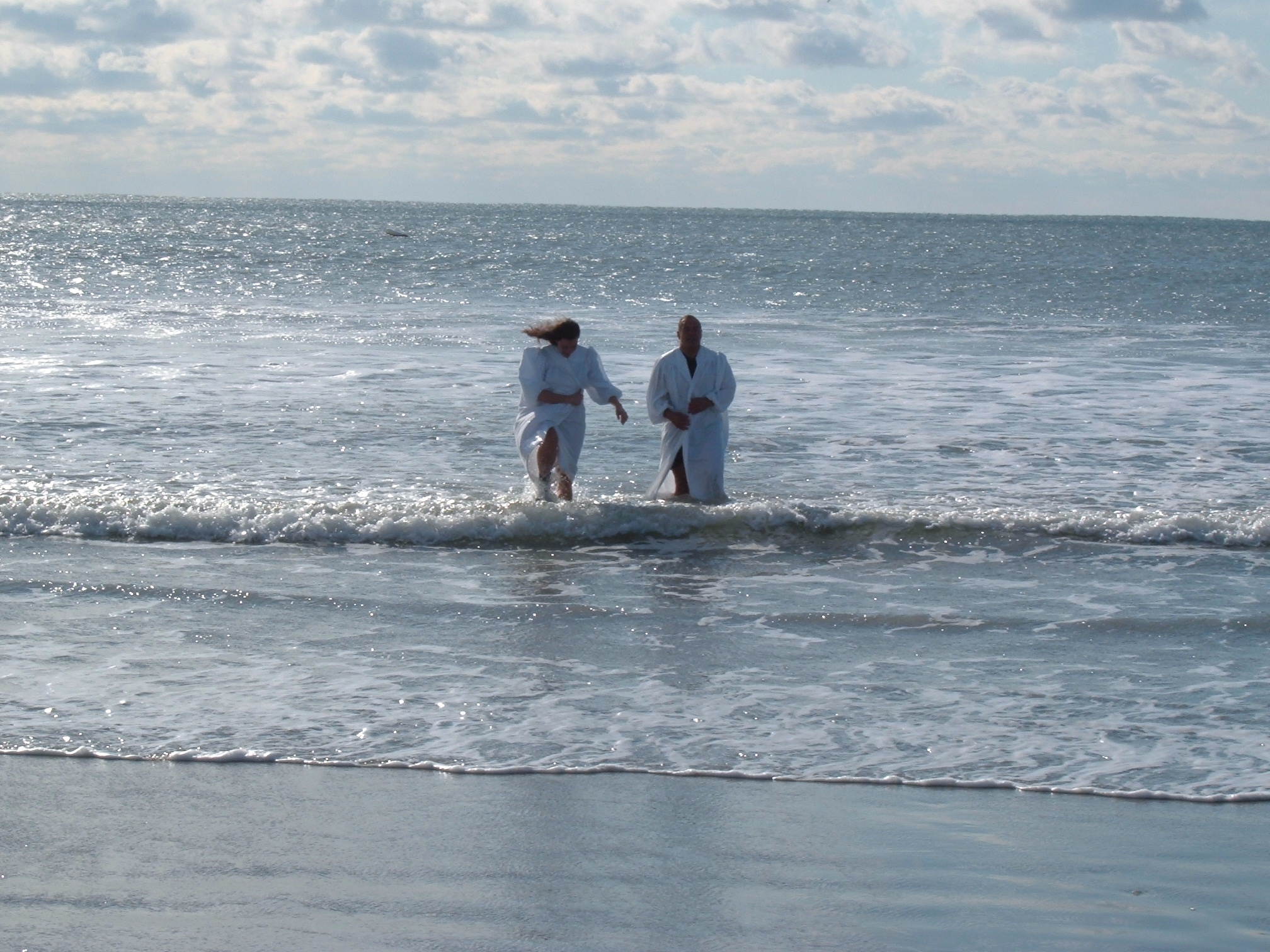
Unfortunately he asked to be baptized in the ocean, in December. “If I die of a heart attack, that’s okay. I want to die to my old way of life. I want to have that new life you are always talking about.” Next December will be the tenth anniversary of his baptism. Despite the 37 degree water, and the foot of snow from a blizzard the night before, the Spirit hovered over the waters, and new life was born. Neither of us died of a heart attack. We just died to some stuff that needed to die.

Ted Top All Time  303 Pictures
This same Holy Spirit is always up to something new. She’s always stirring the soup of our lives. She’s always inviting us, challenging us to see those who are searching, those who are groping, and to give an accounting for the hope that is in us. I learn a lot about God from my husband. Whereas I have been Christian my whole life, he is new to it all, so helps me to see things in new and fresh ways. When good Christian “Churchy” people start talking negatively about other people, my husband will say, “I’m confused. I just don’t get it. How can you say you love God and then treat someone that way? Do people think they can separate God from everyone else? How can they think that? I just don’t get it.” How clear it is to someone whose eyes have so recently been opened. As Jesus said, “I am in my Father, and you in me, and I in you.” We CAN’T separate God from others, even difficult or annoying others. If we are just true to ourselves, true to the Spirit that is within us, within all people, true to the One in whom we live and move and have our being, then we can bear witness to the hope that is within us. Then the world will see something in us, some strength, someplace within us that we have where we can go, some hope, even when others are hopeless, some peace the world cannot give…That you may be One as we are One. You cannot separate God and us. We are all One with the One in whom we live and move and have our being.

Linda`s Pictures Grad, and 394

Today may you see God in all you encounter,
and my you reflect God to all you encounter.
Pastor Linda Forsberg, Copyright May 20, 2014

God as Mother

IMG_0486

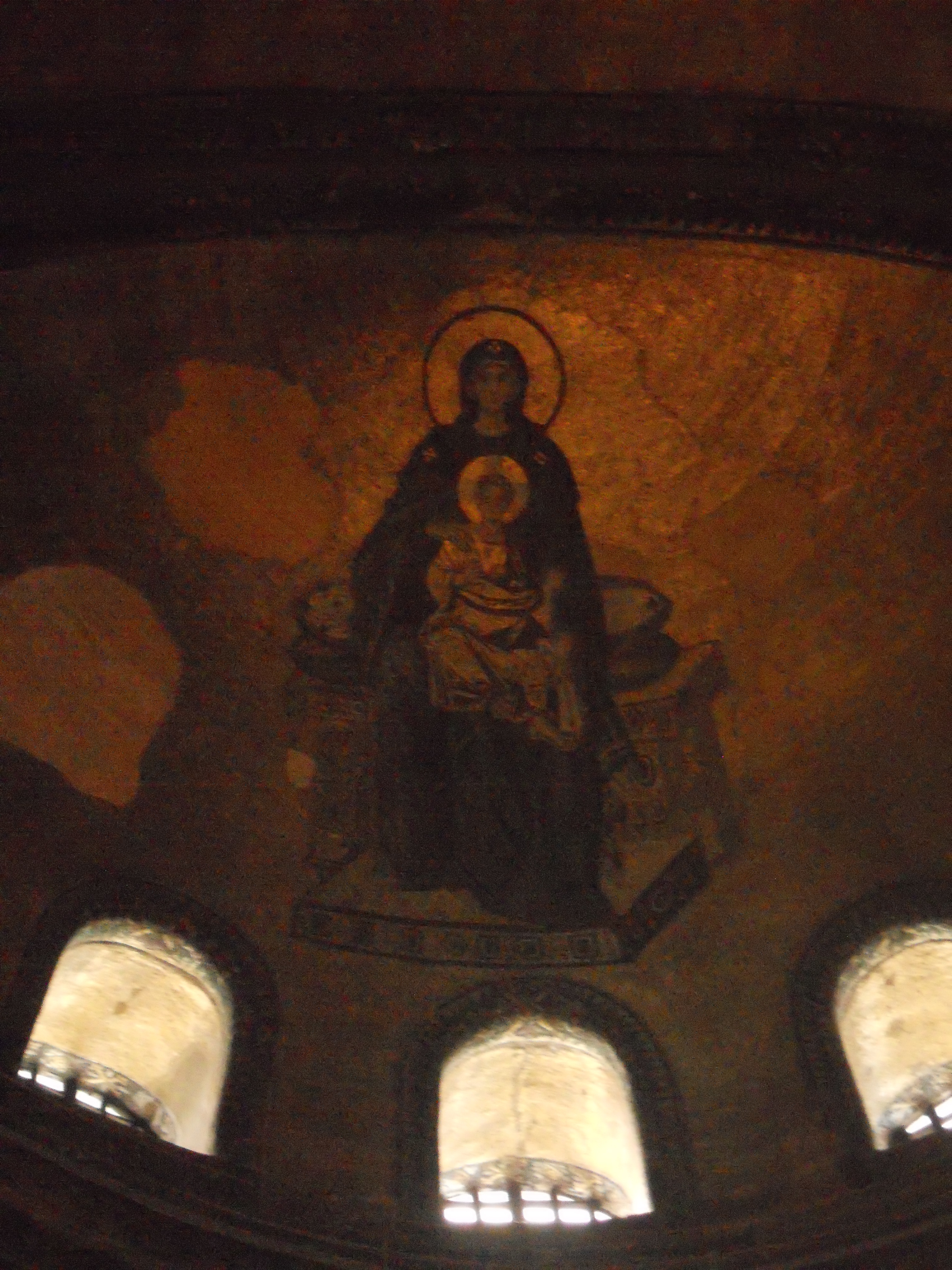
Yesterday was Mother’s Day. I always take the opportunity to preach about God as Mother. Here in the United States, we do not talk much about God as Mother. Most people I talk to say that they believe “God” is neither male nor female, is beyond gender and sexuality, yet when we really examine the way we think about God or the images of God which are most familiar to us, most of us imagine God as male/masculine. Mother’s Day is a good time to challenge ourselves to expand our image or understanding of God by considering some of the maternal aspects of God. In the the most ancient civilizations, where people’s survival depended on the beneficence of the earth, the most universal image of God was primordial Mother, Great mother, Mother earth. Great Mother as the one who birthed us and all creation, as the one who nurtures and sustains us. Today still in many of the world’s religions there is a balance of male and female in the understanding of God: Shiva/Shakti in Hinduism, Mother Earth and Father Sky in Native American spirituality, Yin and Yang in Buddhism. When I travelled in Turkey, a country which today is 90% Muslim, I was struck by the many images of Mary, Mother of Jesus,  in the mosques I visited.

DSCN1906

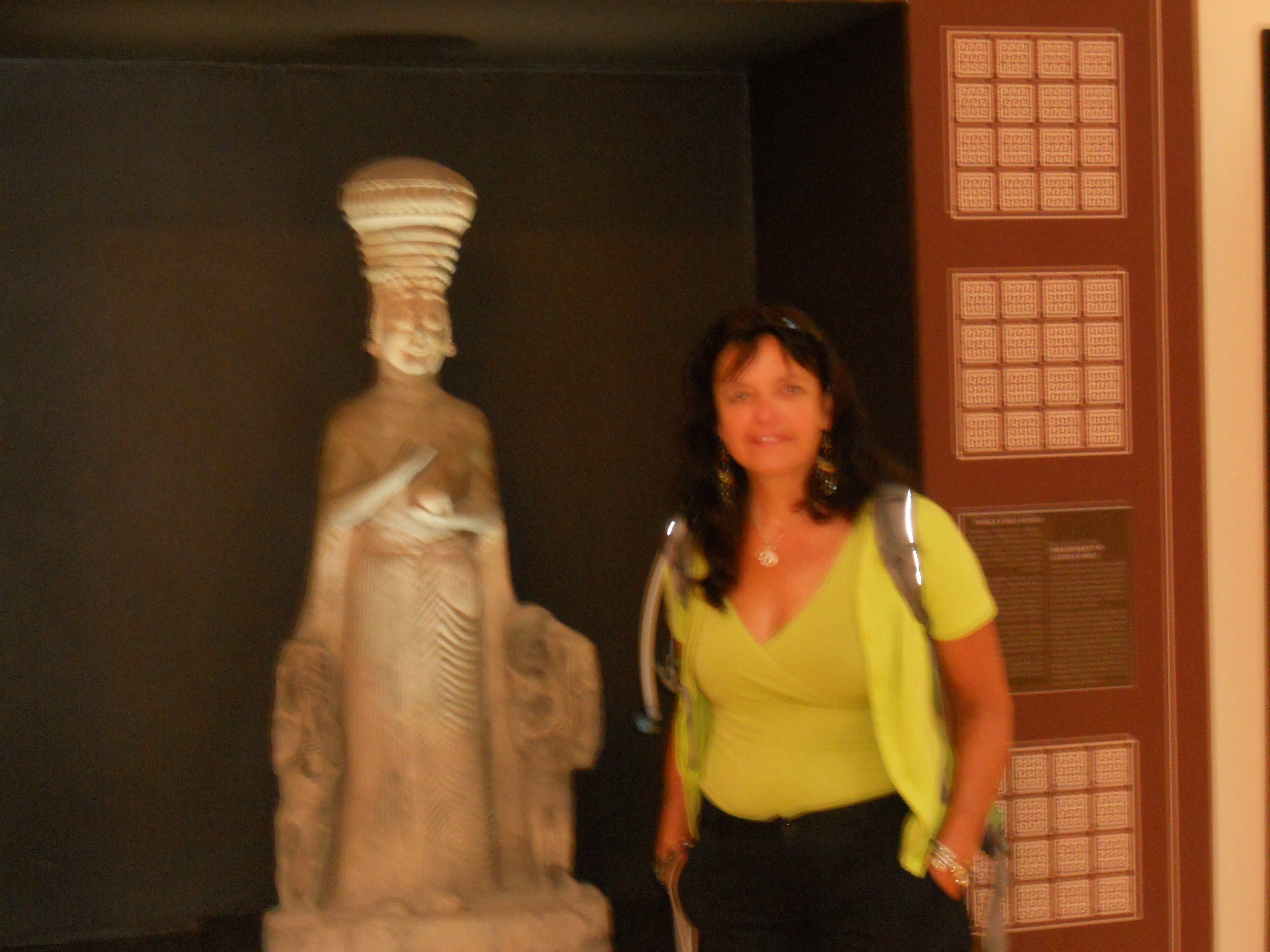
Our guide, who was Muslim, said that Mary is a very important figure in Islam, and he feels that this is because before Islam came to that region, the people worshipped the Great Mother, so Mother Mary was a familiar image which spoke to the hearts of the people. In the Anatolian Cultural Center, which has some of the most ancient artifacts in the world, There are many statues, four-five thousand years old, of the Great Mother, as seen below. Greece & Turkey 4 013   Unfortunately, this balance of male and female in our image of God is most lacking in my own Judeo-Christian tradition. This is because when Judaism developed around 2000 BCE its image of God was monotheistic and patriarchal. The Gods/Goddesses of all of those Canaanites, Amorites, Hittites, and other “-ites” had to be wiped out and destroyed. As is usually the case, when we define ourselves as “over and against” something else, we often go a bit too far. So as patriarchal Judaism defined itself against all of its surrounding neighbor nations, which worshipped God as Mother, it wiped out most of the feminine aspects of its own image of God. Greece & Turkey 4 040 Most aspects. The Hebrew bible (Old Testament) does have some images of God as Mother, but as Krister Stendahl, one of my favorite professors at Harvard Divinity School, said, “It is like balancing a canary against an elephant.” In the Hebrew bible, ironically, the word which is most often translated as “God’s tender love” or “God’s compassion,” literally means “ womb love,” (Rachamim, from the Hebrew word for womb, Rechem) In other word’s “maternal, Mother Love.”
IMG_0277

There is a great deal of feminine God imagery in what bible scholars call Third Isaiah. (The biblical book of “Isaiah” is actually considered three different books by most bible scholars, who label these three portions, First Isaiah, Second Isaiah and Third Isaiah). This imagery is all about nursing, and it is something which spoke to me powerfully when I was a young mother, who nursed my three children. Might the author of Third Isaiah have been a nursing mother herself? For example, one of my favorite texts is from Isaiah 49:15: “Can a woman forget her nursing child; or show no compassion (womb love) on the child of her womb? Even should these be able to forget, I will never forget you, says Yahweh, see, I have inscribed you on the palm of my hand.” I always thought this was a beautiful passage, but when I became a nursing mother, I realized that there was a whole other layer of meaning I had never understood before: a nursing mother CANNOT forget her child.

IMG_0081_2

As every nursing mother knows, it is physiologically impossible to forget your child. When it is “feeding time,” your breasts ache. They become hard as rocks, filled with milk to the point that you are in pain until you are able to nurse your child. Whoever wrote Third Isaiah knew about that! S/he (I would say She) gives us an image of a God who aches to feed us from her “consoling breasts,” and who “dandles us upon her knees.” (Isaiah 66)

IMG_0077_2

In the new Testament Jesus refers to himself as a mother hen, who aches to gather her chicks under her wings, but her rebellious chicks will not have it. This passage takes place the final week of Jesus’ life, as he enters the holy city of Jerusalem. You can hear the aching in his heart for his “children:” “Jerusalem, Jerusalem, how I have longed to gather you under my wings, as a mother hen gathers her chicks, but you would not.” (Matthew 23:37). One of the most famous Christian saints and mystics, Saint Juliana of Norwich, (1342-1416) writes about “Jesus our Mother.” She says that just as a pregnant woman feeds her child with her own body, and her own blood, so Jesus our Mother feeds us in the eucharist with his own body, his own blood. IMG_0486

In the Hebrew bible (Old Testament) the word for Holy Spirit is Ruach, which is a She! In the Greek language of the New Testament the word for Holy Spirit is pneuma, which is a neuter word, but a “feminine concept,” my Greek professor explained to me. Why it has consistently been translated as “He” is beyond me, perhaps because historically most of the translators were male. I remember the day in the early 90s whenI was meeting with the same Rev. Dr. Krister Stendahl, and the Harvard Divinity Bookstore got in the shipment of brand new bibles, New Revised Standard Version(NRSV). Dr. Stendahl and I went to the HDS bookstore,and immediately opened to the Gospel of John, to see if at last the word for Holy Spirit had been translated correctly as “She” or at least as “It,” but alas, we were both dismayed to see the incorrect translation of “He!” Only in the last few years have I started to see scholars and theologians in the Judeo-Christian tradition starting to refer to God as “Godself,” and the Holy Spirit as “She.” Only in the last few years have I seen hymns and liturgical prayers begin to address God as Mother and Spirit as She. The Wisdom literature in the Hebrew bible does, however, translate Wisdom, God’s consort and counterpart in creation, as “She.” But we still have a long way to go. Jesus also gives female images for God. In Luke 15 God is portrayed as the Shepherd who searches for the lost sheep, the Father who yearn’s for his prodigal and lost sons, and the woman who sweeps her house in search of the lost coin.

7-31-2006-13

Ironically, in the Roman Catholic Church, the largest stronghold of patriarchy in Christianity, where sadly even under the beloved new Pope Francis, women’s ordination and equality is still not a reality, there is nevertheless a tremendous veneration of Mary, the Mother of our Lord, the Mother of the Church.

DSCN1650

DSCN1654

Many theologians, myself included, feel that this is because God IS neither male nor female, but has equal aspects of both male and female, and that those aspects will come out somewhere, hence, Mother Mary reflects that feminine aspect of God. Some of you might be bristling at this. Some of you might find this comforting or exciting. I know it takes awhile to truly crack open the “Box” we have constructed around who we think God is. I was a student at Harvard Divinity School in the Eighties, a time of radical feminist theology. I handed in a paper for one course, where I inadvertently named God as “He,” and it was handed back to me, with the “He” circled in red, and a note which said, “Correct your paper.” Surrounded by radical feminist theology, I remember trying to divest myself of all of the male God imagery, praying to God as Mother, to the Holy Spirit as She. But the old guy with a beard kept showing up in my head! It took about six months of daily practice before the feminine side of God finally broke through. But She has continued to do so. Today I continue to hold many images of God: masculine, feminine, and genderless. Because, of course, God is always beyond any and all of our images. We also need to remember that having only one predominant image may actually prevent people from drawing close to God. I say this remembering a Vacation Bible School program for children I taught at an inner city church when I was in Divinity School. The VBS theme was about how God is like a Father. I had a wonderful father, who loved me dearly, so the image of God as my Father filled me with warmth and comfort. But a boy, about ten years old became extremely angry with the image of God as Father: “If God is like a Father, then I want nothing to do with him!” he shouted. “My father abandoned me when I was just a baby.” In other words, every image is limited. On this Mother’s Day I therefore invite you to examine your images of God, and if they are mostly male, to explore the feminine Mother images, since God is Holy/Whole. Especially for those of us who may have been wounded by patriarchy, and by patriarchal churches, our own healing (the word for healing literally means “to be made whole”) and the healing of our world will only come about when we have reached a place of balance and wholeness within ourselves and our world, a balance of masculine and feminine, yin and yang, Carl Jung’s animus and anima, God as Father, and also God as Mother.

IMG_1290


May you see God in all you encounter,

and may you reflect god to all you encounter.

Pastor Linda Forsberg, Copyright May 12, 2014

Today’s Blog is in Loving Memory of My Mother,

Helen Forsberg, whose birthday was today, May 12

New Mexico 1 and 2; Jules' prom; grads 150


Photo Credits in order, all used with permission:  Pregnant woman:  Renata Ricci, photographed by her friend of Perretta Photography; Ceiling of Hagia Sophia, Istanbul, by Linda Forsberg;Linda Forsberg photographed  at Anatolian Museum by Theodore Gibbons; Linda Forsberg photographed at Anatolian Museum by Theodore Gibbons; Eugenia Gibbons and Sylvie photographed by Tim Alperen; Eugenia Gibbons and Sylvie photographed by Linda Forsberg; Linda Forsberg and Victoria Forsberg-Lary, photographed by Timothy Alperen; Linda Forsberg at House of Mary, Mother of Our Lord, Ephesus, by Theodore Gibbons; Prayer Wall at Mary’s House, Ephesus; Nicolette and John Luca Bosco, photographed by Linda Forsberg; Helen Forsberg and Linda Forsberg, photographed by Theodore Gibbons


What Is Heaven?

Ted Top All Time  303 Pictures_2

What is Heaven?

“What is heaven?” asked Victoria DuBois, a senior at Pilgrim High School who had asked if she could interview me for a film she is making about “Heaven.” She was amazingly organized, especially for a high school student. I say this as someone who has worked with teenagers since I was one myself, which is a long time. She had emailed me at the church, set up an appointment, arrived on time. She filmed our worship service, and then our conversation. I asked if her film was her senior project. She said, “No, it is just something I am interested in.” Right away, I liked her. I also was amazed at her maturity. I would have guessed that she was in college, rather than high school. I love the fact that she at such a young age is living her life as spiritual adventure, seeking to learn about the things that intrigue her!
At 53 years old I feel blessed to have the freedom to say what I think.” “Well, you may find my idea of heaven is not exactly orthodox, but I believe “heaven” is not a “place” where we go when we die, but rather a state of being which we can live in right here, right now.” Victoria, with the maturity of someone my age, responded, “That’s kind of how I think of it too.”

7-31-2006-20

To me “heaven” is all about relationship: our relationship with God, with others, (including our planet), and with ourselves. When we are living in a deep, right relationship with God, others, and ourselves, that is “heaven.” When we live in deep communion with God, seeing God in all others, in all that is, and treating all others, all that is with reverence, that is “heaven on earth.”

IMG_2314

Jesus had several names for this: the “kingdom of heaven,” or the “kingdom of God,” or “eternal life.” Jesus said, “The kingdom of God is among you (or within you.)” (Luke 17:21) In other words, it starts NOW. He also said, “THIS is eternal life, that that they may know you, the only true God, and Jesus Christ, whom you have sent.” (John 17:3) (Also NOW!) Saint Paul writes: “Behold NOW is the acceptable time; behold NOW is the day of your salvation.” (2 Corinthians 6:2)
We also discussed heaven’s counterpart: hell. I confessed to Victoria that I do not believe in “hell” as a place either, but rather as a state of being in which we are not living in right relationship with God, others, or ourselves. I quoted Albert Einstein, who said that “evil,” or I would say, “hell,” is “the absence of God.” I love that. When we live our lives in the absence of God, that is “hell.” In other words, we create our own “hell.” Victoria said she felt similarly.

DSCN3010During Lent our “theme” in our community of faith was “Deepening Faith.” We used a film series called “Animate Faith.” It featured seven leading voices in the post-modern, post-Christian, “emerging” church movement. The session that was everyone’s favorite was the one on “Salvation,” (a very “churchy” word) which for many means the same thing as “heaven.” The speaker for this “Salvation” clip was a young man named Shane Hipps. He was the teaching pastor at Mars Hill Church in Grand Rapids, Michigan, but before that his career was in the advertising industry, with accounts like Guinness and Porsche. His ten minute clip on salvation says pretty much the same thing: that heaven is here and now. (See link in sidebar)I admit, when we watch the news we ask ourselves, “Surely this life of prejudice, conflict, war, income inequality, injustice, oppression, racism, sexism, etc. – this cannot be heaven, can it?” No, as I learned in seminary, “heaven is both “already,” and at the same time “ not yet.” A paradox, yes. Prejudice, injustice, conflict, war, is when we are not living in right relationship with God, others, or ourselves. (In other words, “hell.”) But when we stand against these things because we seek to live in deep communion with God, others, and ourselves, we are one by one ushering in the reign of God, “salvation,” or “heaven.” Some time ago there was a film, a comedy, called “Heaven can wait.” But look around, and you will see that “Heaven cannot wait.” Here, now, you and I are invited to live in right relationship with God, others, and ourselves, to live in the reign of God.

IMG_2202

Right here, right now, today and every day, may you see God in all you encounter, and may you reflect God to all you encounter. When you do, you will see that heaven is right here, right now.
Pastor Linda Copyright, May 6, 2014